
Earning Distribution on Google Play: 1,059 Installs at a 20% Store Conversion Rate
20.13%
Play Store Conversion Rate
AI For Everyone: Learn AI & ML
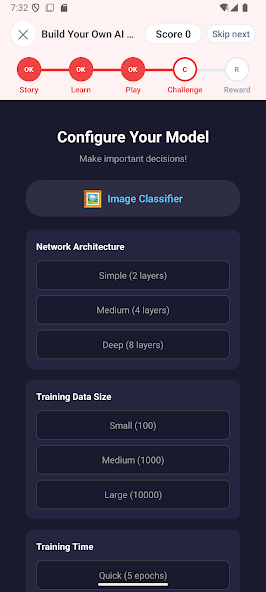
30 lessons, 48 interactive games, five levels -- built for absolute beginners.
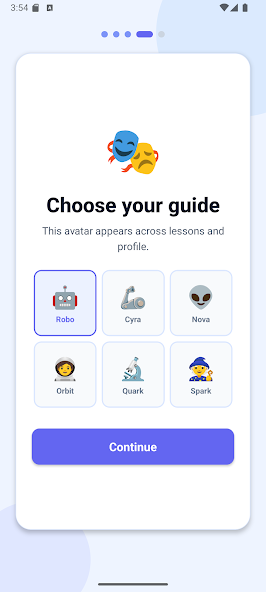
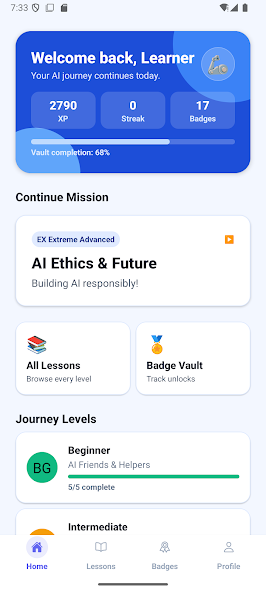
Onboarding
Pick a guide that follows you through every lessonThe Challenge
A new Android publisher launching an AI-education app into one of Google Play's most saturated categories -- with no existing audience and zero spend on user acquisition.
AI For Everyone shipped to Google Play in late 2025 with a real problem behind it: the build was done, and nobody could find it. Play Console showed a flat zero through October and November -- zero store listing visitors, zero installs. The AI-learning category was already crowded with video-course apps and text-tutorial apps backed by established publishers and paid user acquisition. AIPowered had none of that: no install base to bootstrap from, no email list, no ad budget. And Google Play is a closed loop -- the store surfaces apps that already show strong engagement, which means an app with no users has no way to signal that it deserves users. That cold-start problem, not the engineering, was the actual brief.
A finished app with no distribution earns nothing. Every week without installs was sunk build cost with no return against it.
Zero store listing visitors and zero installs through the first weeks post-launch
Not a cent of paid user acquisition, in a category dominated by publishers who buy installs
Competing AI-learning apps front-load theory and lose users before a second session -- the same trap to avoid
With no paid traffic, the store listing itself was the entire funnel: conversion rate would decide everything
Discovery
Stakeholders:
What We Uncovered
Beginner-level AI search demand ("how ChatGPT works", "what is machine learning") was growing far faster than the supply of genuinely zero-prerequisite apps
Most competing apps were passive -- video or text -- with drop-off concentrated before the second session
Google Play surfaces apps in Explore based on engagement quality, not ad spend, which meant retention was the acquisition strategy, not a post-launch concern
Play Store search rankings for a new listing take months to mature, so the launch plan had to survive a long window where search contributed nothing
Our Approach
Build for retention first, because on Google Play retention is distribution. A gamified lesson loop engineered to produce second and third sessions, wrapped in a keyword-complete store listing, then measured against Play Console channel data and iterated.
Curriculum & Product Architecture
Phase 1Five-level progression: Beginner, Intermediate, Advanced, Extreme, Pro
30 structured lessons with zero assumed prerequisites
Five-phase lesson loop: Story, Learn, Play, Challenge, Reward
Session length targeted at 15-20 minutes
Interactive Build
Phase 248 interactive learning games
Concept simulators: Token Prediction, Neural Network Builder, LLM Explorer
Applied modules: AI Art Critic, Filter Bubble, Career Path Builder
React Native codebase, shipped to Google Play
Retention Systems
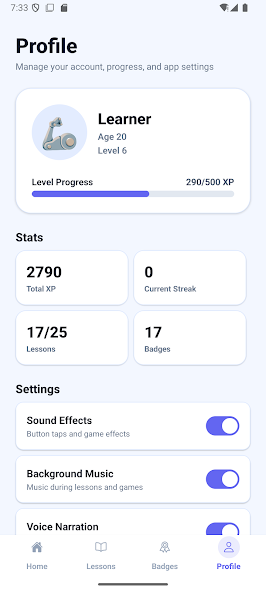
Phase 3XP and level progression
Daily streak tracking
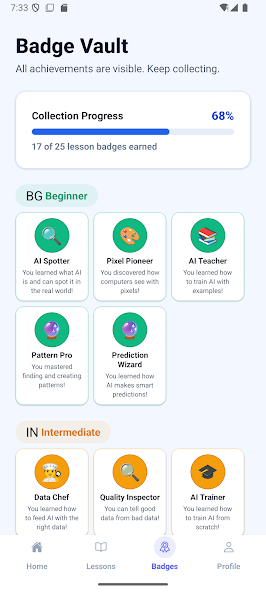
Badge Vault with lesson-linked achievement unlocks
Profile and progress dashboard with completion percentage
Store Listing & ASO
Phase 4Keyword-mapped title and short description
Long-description coverage across 20+ target phrases
Screenshot sequence built around game mechanics, not feature lists
Category, content rating, and Data safety configuration
Monetization
Phase 5In-app advertising integration
Amazon Associates resource library, organized by learner level
Affiliate disclosure in both the store listing and the app
Ad placement tuned against session-length impact rather than raw impressions
Measure & Iterate
OngoingPlay Console acquisition and conversion tracking
Channel-level attribution: Explore vs. Search vs. referrals
Store listing iteration against conversion rate
Outcomes
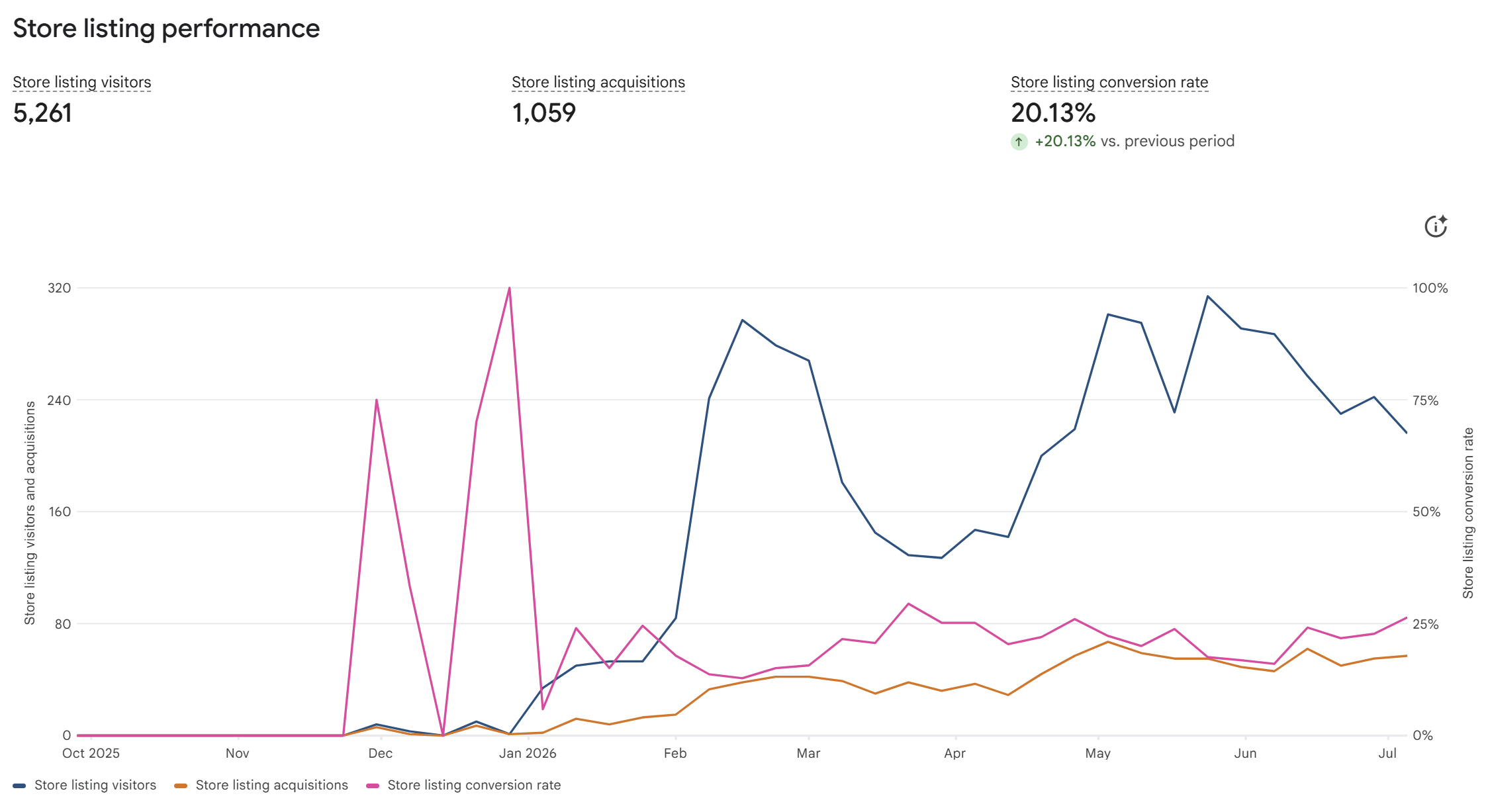
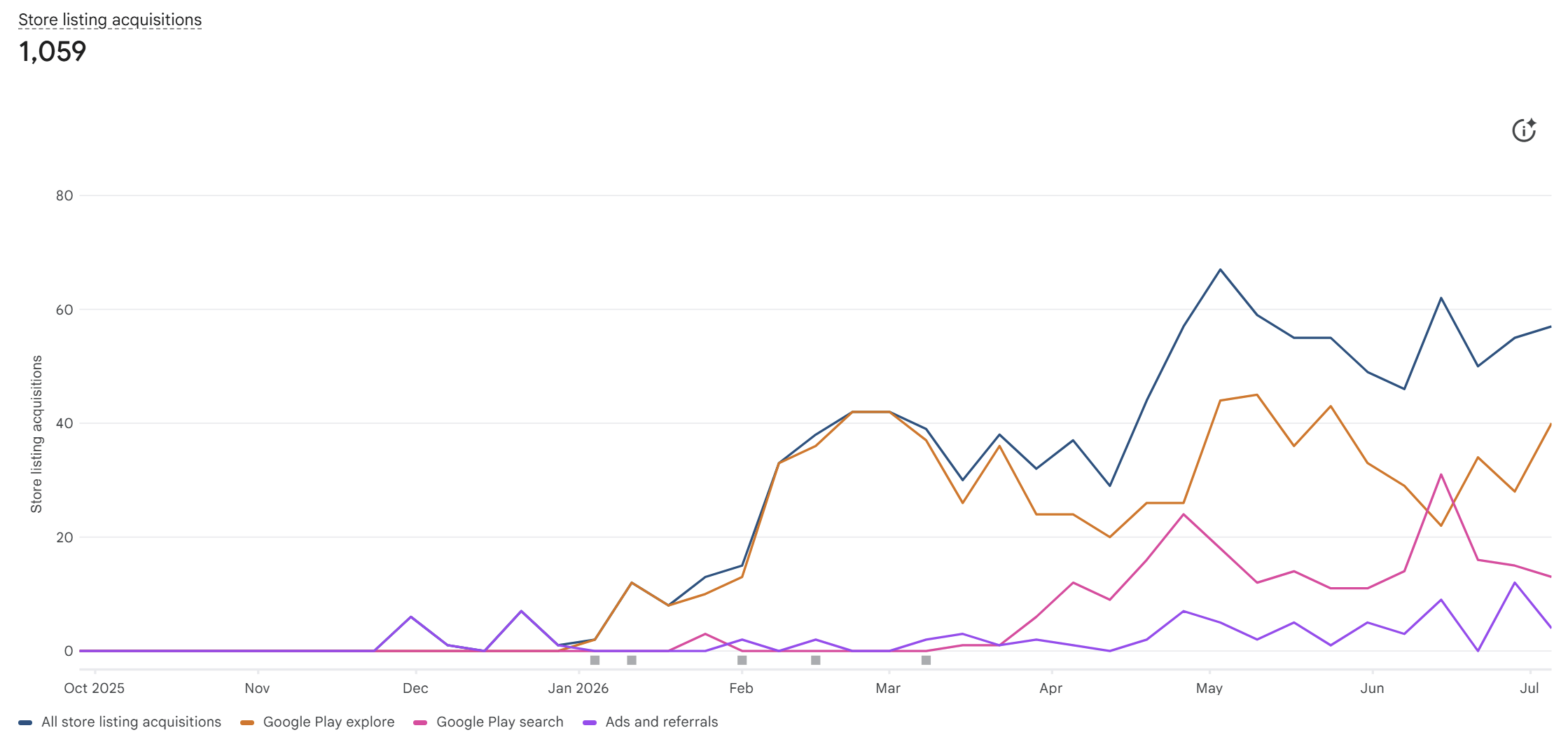
Every one of these installs was earned. There was no paid user acquisition at any point -- no install campaigns, no burst buying, no ad spend of any kind. Store listing traffic went from a flat zero in October 2025 to a sustained 200-300 visitors per week by mid-2026, converting at 20.13%. The largest share came from Google Play explore, the algorithmic recommendation surface a publisher cannot buy into, which is the store rewarding engagement quality. Google Play search contributed nothing through February, then grew into a steady weekly channel from spring onward: the signature shape of ASO compounding, and the same curve our SEO engagements produce on the web. (Play Console files a small "Ads and referrals" channel, which here is entirely organic referrals from links to the listing -- no campaign sits behind it.) Underneath all of it, crash-free users held above 99% across every release in the window: the store will not keep recommending an app that falls over, so stability is not a separate concern from distribution -- it is the precondition for it.
0
1,059
No baseline
20.13%
0
5,261
0
~57/week (peak 67)
Zero through Feb 2026
Steady weekly channel
n/a at launch
99%+
Every install was earned rather than bought: 1,059 of them on zero ad spend, through product quality and store optimization alone. Ad and affiliate revenue now runs against an install base that compounds month over month, instead of one that resets the moment a campaign budget stops. Because the app is built on React Native, the same codebase carries to iOS whenever the publisher wants a second store -- the build is not a single-platform dead end.
Time to first result: ~3 months to first sustained install volume (Feb 2026)
Related Services
Start a project like this
We help businesses build compounding organic channels that replace paid dependency. Let's talk about what that looks like for you.
Get a Free Consultation