
A potential client types "best personal injury lawyer in Dallas" into ChatGPT. Three firms get mentioned by name. Yours is not one of them. This scenario is playing out thousands of times daily as clients increasingly use AI tools to find and evaluate lawyers. If your firm is invisible to AI, you are losing clients to firms that are not.
Short answer: AI-referred traffic to law firms surged 527% in the first five months of 2025 compared to 2024. Gartner predicts traditional search volume could decline 25% by 2026 as chat-based discovery grows. Getting featured requires Generative Engine Optimization (GEO): structured content with direct answers, attorney attribution with credentials, schema markup, verifiable legal citations, and local authority signals. Results appear in 60-90 days for foundational optimizations.
GEO vs Traditional SEO
Generative Engine Optimization is the process of optimizing content to enhance visibility within AI-generated responses from ChatGPT, Claude, Gemini, Perplexity, and Google AI Overviews. Unlike traditional SEO, which aims to rank high in search results to drive clicks, GEO focuses on getting cited, referenced, and recommended directly within AI-generated answers.
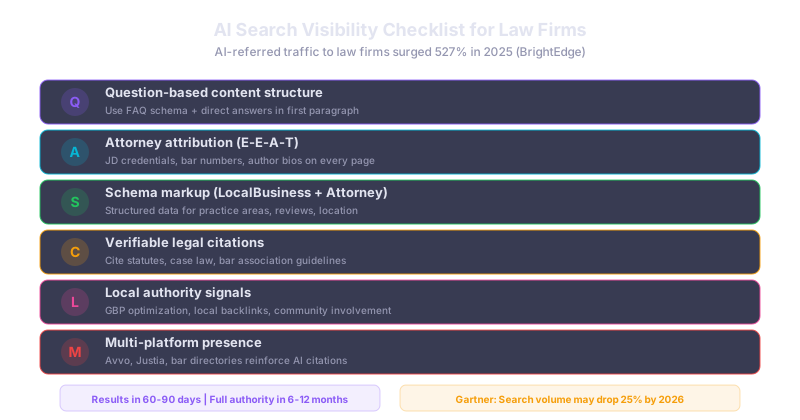
The critical insight is that Google rankings do not automatically translate to AI visibility. ChatGPT and Perplexity use different ranking signals. A firm ranking third on Google can have zero AI citations without proper optimization. Five factors determine whether AI systems cite your firm: attorney attribution with JD credentials, question-based content structure, schema markup, verifiable legal citations, and local authority signals.
Structure Content for AI Consumption
AI systems extract answers from clearly structured content. Every practice area page and blog post should open with a direct answer to the question the page targets. Use header tags that match natural language queries. Include FAQ sections with schema markup so AI systems can easily identify and extract your answers.
Format matters more than length. A 600-word page with clear headers, direct answers, and structured data outperforms a 3,000-word page of unstructured prose when it comes to AI citations. Use numbered lists, comparison tables, and definition formats that AI systems can parse efficiently.
Build Attorney Authority Signals
AI platforms evaluate expertise signals differently than traditional search. Include full attorney bios with JD credentials, bar admission dates, and bar numbers on every page. Cite specific statutes, case law, and bar association guidelines in your content rather than making general claims.
Author attribution is critical. Every piece of content should be tied to a named attorney with verifiable credentials. AI systems weigh content attributed to identified experts more heavily than content from anonymous sources.
Strengthen Local Authority
For location-specific queries like "best family lawyer in Denver," AI systems look for local authority signals. These include an optimized Google Business Profile, backlinks from local news outlets and legal organizations, reviews mentioning your city or neighborhood, and consistent NAP citations across legal directories like Avvo, Justia, and state bar directories.
Your presence on multiple authoritative platforms reinforces AI citations. When Avvo, Justia, bar directories, and your own website all confirm the same information about your firm, AI systems have higher confidence in recommending you.
The Timeline and Competitive Window
Law firms implementing GEO strategies typically see AI citation improvements within 60-90 days for foundational content and schema optimizations. Building consistent AI authority across multiple platforms and practice areas takes 6-12 months.
The competitive advantage window is closing. Early adopters build competitive moats as AI systems train on current citations, giving established firms lasting superiority. By 2027, the gap between AI-optimized firms and traditional-only firms will become nearly insurmountable without massive investment.
What This Means for Your Practice
Start with an audit. Search for your practice area and city in ChatGPT and Perplexity. If your firm does not appear, you have a GEO gap. Focus first on schema markup and content restructuring for your highest-value practice areas, then expand to build multi-platform authority signals.
This is not a replacement for traditional SEO. It is an additional layer that captures the growing share of clients who discover lawyers through AI tools rather than traditional search results.
Related reads:
- AI Chatbots for Law Firm Websites: Do They Actually Work?
- What to Blog About as a Personal Injury Lawyer
Ready to make your firm visible in AI search results? Our generative engine optimization services help law firms get cited in ChatGPT, Perplexity, and AI Overviews. Get started.