
You signed up for one delivery app, maybe two. Orders came in, but the end-of-month statement told a different story: commission fees ate 30% or more of every sale. Now you are wondering which platform actually leaves money on the table for you, not just for them.
Short answer: DoorDash has the biggest customer base at 67% US market share, but all three platforms charge 15-30% commission on delivery orders. The best choice depends on your market, order volume, and whether you plan to build direct ordering alongside third-party apps.
Commission Fees Side by Side
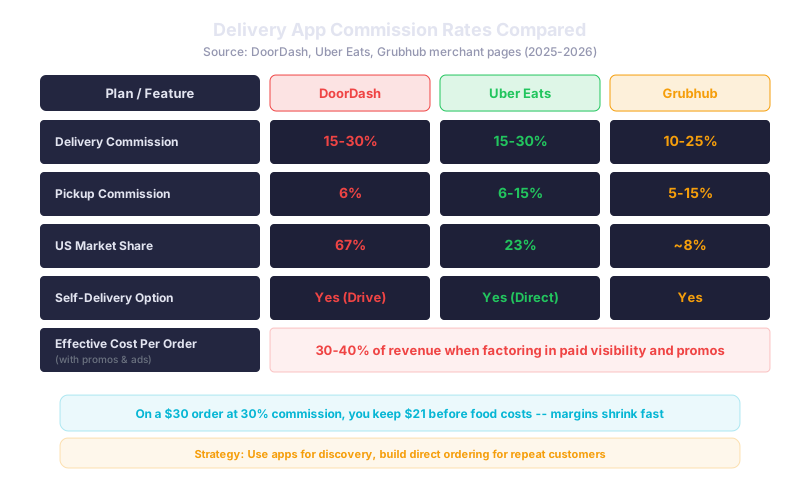
Here is what each platform charges restaurants in 2025-2026:
DoorDash offers three tiers: Basic at 15% commission, Plus at 25%, and Premier at 30%. Pickup orders cost 6%. The higher tiers include better visibility and DashPass promotion. DoorDash also charges a payment processing fee on top of commission.
Uber Eats uses a similar tiered structure with delivery commissions between 15% and 30%. Their Webshop product for direct ordering charges just 2.5% plus $0.29 per transaction, making it worth considering if you want a branded ordering page.
Grubhub starts its Direct plan at 10% and scales to 25% for full marketplace delivery. They offer a self-delivery option that can lower costs. Grubhub also sells advertising add-ons that push effective costs higher.
The Hidden Cost Problem
The advertised commission rate is not the real cost. When you factor in paid promotions, featured placement fees, and service add-ons, restaurants report the effective cost per order creeps to 30-40% of revenue. On a $30 order at 30% commission, you keep $21 before food costs, labor, and rent. Margins shrink fast.
Market Reach and Customer Base
DoorDash dominates with roughly 67% of US meal delivery sales as of recent data, followed by Uber Eats at 23% and Grubhub at around 8%. That market share matters because it determines how many customers can find your restaurant on each app.
However, market share varies by city. Grubhub still has a strong presence in northeastern metro areas. Uber Eats performs well in dense urban markets. Check which app your specific customer base uses most before committing to a premium plan.
Which Platform Fits Your Restaurant?
Choose DoorDash if you want maximum reach. It has the largest US user base and strong suburban coverage. The Basic 15% plan works for testing, though visibility is limited.
Choose Uber Eats if you are in an urban area and want to combine third-party delivery with a branded direct ordering page through Webshop at 2.5% plus processing fees.
Choose Grubhub if you handle your own delivery. Their self-delivery option can keep commissions lower, and their Direct plan starts at 10%.
The real strategy: Use third-party apps for discovery and new customer acquisition, then move repeat customers to your own direct ordering system where you pay processing fees of 2-3% instead of 15-30% commission.
What This Means for Your Restaurant
No single app is "best" for every restaurant. The smart move is to treat delivery apps as a marketing channel, not your primary revenue source. Use them to get in front of new customers, then give those customers a reason to order directly from you next time.
If delivery orders make up more than 30% of your revenue and you are not running your own ordering system, you are likely leaving thousands of dollars per month in commission fees on the table.
Related reads:
Spending too much on delivery commissions? We help restaurants build direct ordering systems and marketing strategies that reduce third-party dependency. Let us show you how.