
Every SaaS founder faces this decision: do you offer a free trial with a deadline, or a freemium plan that lasts forever? Both models have vocal advocates. Both have worked for massive companies. But the data tells a more nuanced story than "just pick one."
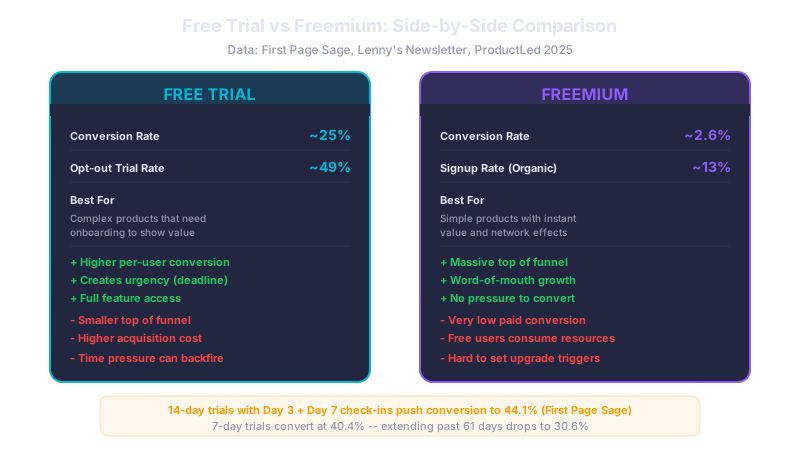
Short answer: Free trials convert users to paid customers at roughly 25% (industry benchmark), while freemium models convert at about 2.6% from organic traffic. However, freemium attracts approximately 13% of visitors to sign up compared to lower signup rates for trials. The right choice depends on your product complexity, average contract value, and growth strategy.
The Conversion Rate RealityThe numbers break down clearly (First Page Sage and ProductLed benchmarks). Opt-in free trials (no credit card required) convert at about 18.2% from organic traffic. Opt-out trials (credit card required upfront) convert at a much higher 48.8%, though they attract fewer signups.
Freemium models tell a different story. About 13.3% of organic visitors sign up for a freemium product, but only 2.6% of those free users convert to paid. The math means freemium excels at building a large user base but struggles with monetization per user.
When Free Trial Wins
Free trials work best when your product requires onboarding to demonstrate value, your average contract value is high enough to justify hands-on sales support, and the value is not obvious until someone uses the full feature set.
Products like CRM systems, project management tools, and analytics platforms often need a guided trial experience. Users need to import data, configure settings, and use the product for real work before they understand its value. CRM products achieve roughly 29% trial-to-paid conversion because the value compounds as users add contacts and track deals.
The sweet spot for trial length is 14 days with structured check-ins on Day 3 and Day 7, which can push conversion rates to 44.1% (First Page Sage). Seven-day trials convert at 40.4%. Extending past 61 days drops conversion to 30.6% because urgency disappears.
When Freemium Wins
Freemium works best when your product delivers instant value without setup, network effects drive growth (more users make the product better), your marginal cost per free user is near zero, and you are optimizing for market share over short-term revenue.
Think Slack, Dropbox, and Canva. These products are immediately useful in their free versions, and free users naturally invite others, creating organic growth loops.
The Hybrid Approach
Many successful SaaS companies use both. Offer a freemium tier for self-serve users who discover the product organically and a free trial of the premium features for users who need the full experience before committing.
This approach lets you capture the wide funnel of freemium signups while also converting high-intent users through a trial experience.
For SaaS companies evaluating their pricing model, the decision should be driven by data, not assumptions. Run a structured test: offer free trial to 50% of traffic and freemium to the other 50%, and measure not just initial conversion but 90-day retention and lifetime value.
What This Means for Your Business
Do not copy your competitor's pricing model without understanding why it works for them. If your product needs onboarding to show value, start with a 14-day trial. If your product is instantly useful and benefits from network effects, test freemium. Either way, measure conversion from free to paid, not just signups.
Related reads:
- How to Get Your First 100 SaaS Customers
- SaaS Pricing Page: Best Practices That Convert
- What to Expect in the First 90 Days with a Marketing Agency
Need help optimizing your SaaS conversion funnel? We build growth strategies for SaaS companies that increase trial-to-paid conversion and reduce churn. Talk to our team
