
Someone searches "Italian restaurant near me." Two results appear. One shows a plain blue link. The other shows star ratings, price range, hours, and a photo. Which one gets the click? You already know the answer.
Short answer: Schema markup is structured code you add to your restaurant website that tells Google exactly what your business offers. Pages with rich results see up to 82% higher click-through rates than standard listings, and implementation takes a few hours with JSON-LD format.
What Schema Markup Does for Restaurants
Schema markup is a standardized vocabulary of code, typically in JSON-LD format, that you add to your web pages to tell search engines exactly what your content represents. For restaurants, this means Google can display your hours, cuisine type, price range, ratings, and menu items directly in search results.
In March 2025, both Google and Microsoft confirmed they use schema markup for their generative AI features. That means structured data does not just help traditional search; it feeds the AI answers that are increasingly replacing standard search results.
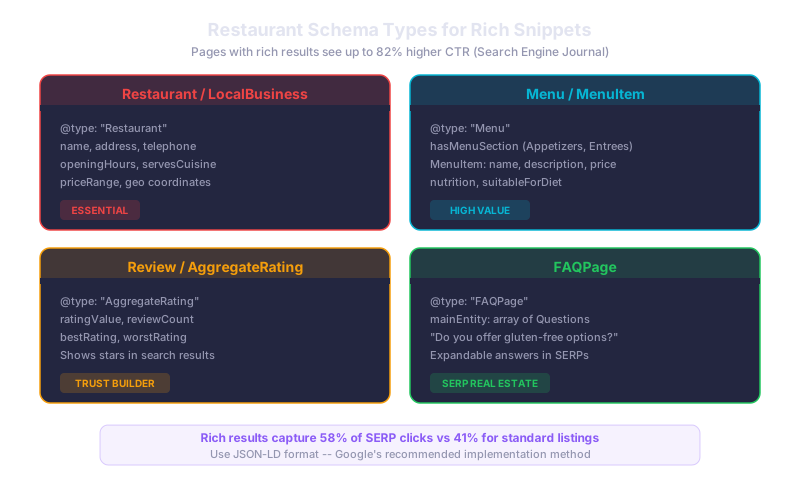
Rich results capture 58% of clicks on search engine results pages, compared to 41% for non-rich results. That is not a marginal difference. It is the difference between getting found and getting skipped.
The Four Essential Schema Types
1. Restaurant / LocalBusiness Schema This is the foundation. It tells Google your business name, address, phone number, hours, cuisine type, and price range. Use the specific "Restaurant" type rather than the generic "LocalBusiness" so Google knows you serve food.
2. Menu / MenuItem Schema Mark up your menu sections and individual items with names, descriptions, and prices. This can surface menu information directly in search results and helps voice search assistants answer questions like "does [restaurant] have vegetarian options?"
3. AggregateRating / Review Schema Display your star rating and review count in search results. Those gold stars build trust before anyone clicks through. Include the ratingValue, reviewCount, and bestRating properties.
4. FAQPage Schema Add structured FAQ data for common questions: "Do you offer gluten-free options?" "Is there parking?" "Do you take reservations?" Google can display these as expandable answers directly in search results, taking up more SERP real estate.
How to Implement (JSON-LD)
Google recommends JSON-LD format for all structured data. Place the script in the head or body of your HTML. Here is a simplified example of the core structure:
Add a script tag with type "application/ld+json" containing your Restaurant schema object. Include @context pointing to schema.org, @type set to "Restaurant," and fill in your name, image URL, address (as a PostalAddress object), telephone, openingHoursSpecification, servesCuisine, priceRange, and aggregateRating.
After adding the markup, validate it with Google's Rich Results Test tool. Fix any errors or warnings before expecting rich results to appear.
Common Mistakes to Avoid
Using generic "LocalBusiness" schema instead of "Restaurant" schema means Google may not display food-specific rich results. Omitting the geo coordinates (latitude and longitude) weakens your local search signals. And marking up reviews that do not actually exist on your site violates Google's guidelines and can result in a manual penalty.
What This Means for Your Restaurant
Schema markup is one of the highest-impact, lowest-cost SEO improvements you can make. Studies show a typical CTR uplift of 20-80% for pages that earn rich results. For a restaurant that depends on local search traffic, that translates directly into more reservations and online orders.
You can implement the basics in an afternoon, or have your developer handle it. Test with Google's tools, monitor your Search Console for rich result impressions, and update your schema whenever you change hours, menus, or contact information.
Related reads:
Want rich snippets driving more clicks to your restaurant website? We implement schema markup and local SEO strategies that make your listings stand out. Get started.
