
You've set aside $1,000 a month for marketing. Maybe it's the first time you've ever had a real marketing budget. Maybe you've been relying on word of mouth and it's starting to slow down. Either way, you're staring at two options that every marketing agency will pitch you: Google Ads or SEO.
The honest answer is that neither one is universally better. It depends on your business, your timeline, and what you can afford to wait for. This article breaks down both options with real numbers so you can make the right call for your situation, not someone else's.
We offer both services, so we have no reason to push you toward one over the other. What we do care about is making sure your money works.
What Google Ads Actually Costs (Real Numbers by Industry)
Let's skip the theory and talk dollars. When someone searches "plumber near me" or "emergency AC repair" and clicks your ad, you pay Google. That's the cost per click (CPC). Here's what local service businesses actually pay per click in 2026, based on industry data from WordStream, LocaliQ, and Google's own Keyword Planner:
- HVAC: $8 to $25 per click
- Plumbing: $10 to $30 per click
- Dentist: $6 to $20 per click
- Lawyer: $15 to $80 per click
- Electrician: $8 to $20 per click
- Roofing: $15 to $40 per click
- Landscaping: $5 to $15 per click
- Auto repair: $6 to $18 per click
So What Does $1,000 Get You?
Let's run the math with a $15 average CPC, which is typical for most local service industries:
- $1,000 / $15 per click = roughly 66 clicks per month
- At a 5% to 10% conversion rate (meaning 5 to 10 out of every 100 visitors call you or fill out a form), that's 3 to 7 leads per month
- If your average job is worth $500 or more, a single closed job can pay for the entire month of ads
The catch? Every month you stop paying, the leads stop. Immediately. There's no residual value. You're renting visibility, not building it.
For a deeper look at how to get the most out of every marketing dollar, see our complete digital marketing budget guide.
What SEO Actually Costs (And How Long It Takes)
SEO stands for search engine optimization. It's the process of getting your website to show up in Google's organic (non-ad) results. When someone searches "best plumber in Phoenix" and sees a list of websites below the ads, those positions are earned through SEO.
A competent local SEO provider charging $1,000 per month will typically deliver:
- Google Business Profile optimization (your listing on Google Maps)
- On-page optimization for 2 to 4 service pages per month
- Local citation building (getting your business listed consistently across directories like Yelp, Angi, and BBB)
- Content creation (1 to 2 blog posts targeting questions your customers search for)
- Technical fixes (site speed, mobile usability, structured data)
The Timeline Nobody Wants to Hear
Here's where SEO frustrates business owners. It works, but not fast.
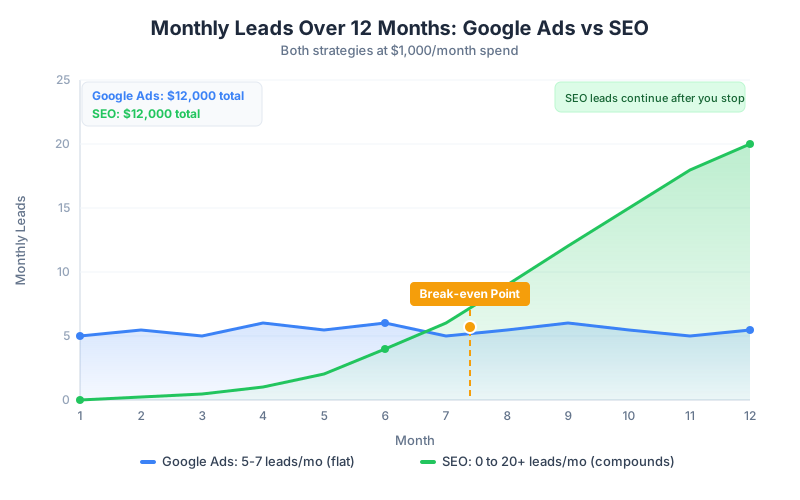
- Months 1 to 3: Foundation work. Your provider is fixing technical issues, optimizing existing pages, building citations, and setting up tracking. You'll see minimal results. Maybe a few more impressions in Google Search Console. This is the phase where most people quit, and it's the worst time to quit.
- Months 4 to 6: Rankings start moving. You might jump from page 3 to page 1 for a few keywords. Leads start trickling in. Maybe 3 to 8 organic leads per month.
- Months 6 to 12: Compound growth kicks in. As your domain authority builds and more pages rank, traffic accelerates. You could be pulling in 10 to 30 organic leads per month depending on your market.
- Year 2 and beyond: SEO becomes your cheapest lead source. The content and authority you've built continue generating leads even if you reduce your monthly investment.
Side-by-Side Comparison
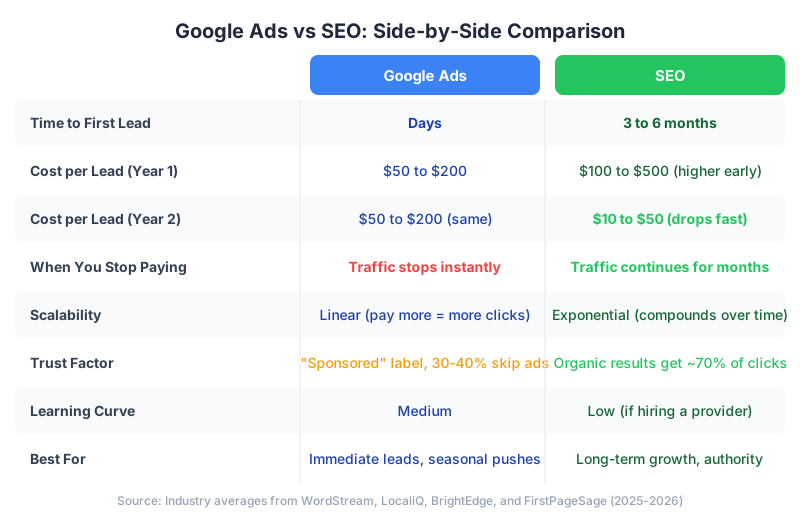
Here's how Google Ads and SEO stack up across the metrics that actually matter to a local business owner:
| Metric | Google Ads | SEO |
|---|---|---|
| Time to first lead | Days | 3 to 6 months |
| Cost per lead (Year 1) | $50 to $200 | $100 to $500 (higher early on) |
| Cost per lead (Year 2) | $50 to $200 (stays the same) | $10 to $50 (drops dramatically) |
| When you stop paying | Traffic stops instantly | Traffic continues for months |
| Learning curve | Medium (or hire a manager) | Low if hiring a provider |
| Scalability | Linear: more money = more clicks | Exponential: compounds over time |
| Trust factor | "Sponsored" label reduces clicks 30% to 40% | Organic results get roughly 70% of clicks |
| Best for | Immediate leads, seasonal pushes | Long-term growth, authority building |
When Google Ads Is the Smarter Move
Google Ads isn't a waste of money. For certain situations, it's clearly the right call. Here's when to lean heavily into paid ads:
You just opened your business and need leads now. You have no online presence, no reviews, and no website authority. SEO will take months to build. Google Ads puts you in front of customers searching for your services today. A new HVAC company in Houston can't afford to wait six months for organic traffic. They need calls this week.
You run a seasonal business. If you're an AC repair company, you need maximum visibility in May through September. If you do heating work, October through February is your window. Google Ads lets you ramp up spending during peak season and pull back during the slow months. SEO doesn't turn on and off like that.
You're testing a new service area. Thinking about expanding to a neighboring city? Run ads targeting that area for a month or two before committing to a full SEO campaign. If the leads come in and the numbers work, then invest in SEO for that market.
Your competitors dominate organic search. If the top three organic results for "electrician in [your city]" are established companies with hundreds of reviews and years of content, you can't outrank them next month. But you can show up above them with an ad while you build your organic presence.
You have a high-ticket service. If your average job is $2,000 or more (think roof replacements, HVAC installations, kitchen remodels), the math is forgiving. Even at $30 per click and a 5% conversion rate, you're paying roughly $600 per lead. If you close half of those leads on $5,000 jobs, you're doing very well.
When SEO Is the Smarter Move
SEO is a long game, and that's precisely what makes it powerful. Here's when it makes sense to prioritize organic search:
You plan to be in business for 3 or more years. If you're building something that's going to last, SEO is an investment that pays increasing dividends over time. A plumbing company that's been serving its community for 15 years and plans to serve it for 15 more should absolutely be investing in SEO.
Your Google Business Profile has reviews but your website doesn't rank. This is more common than you'd think. You have 50, 100, maybe 200 reviews on Google. Customers love you. But when someone searches for your core services, your website is nowhere to be found. That's a massive missed opportunity that SEO directly addresses.
You're tired of paying more every year for the same clicks. Google Ads costs trend upward over time as more businesses compete for the same keywords. The CPC for "plumber near me" in most major metros has increased 15% to 25% over the past three years. SEO is the hedge against that inflation.
Your competitors are spending big on ads, and costs keep rising. In highly competitive markets (think personal injury lawyers in Los Angeles or HVAC companies in Phoenix), CPCs can be brutal. When you're paying $40 to $80 per click, $1,000 buys you very few chances. SEO lets you compete without playing that bidding war.
You want leads that don't disappear when you pause your budget. Every dollar spent on SEO builds something. A page you rank today can generate leads for years. A Google Ad you ran yesterday is gone.
Not sure which approach fits your business? Book a free strategy call and we will map out a plan based on your budget and timeline.
The Smart Approach: How to Split $1,000/Month
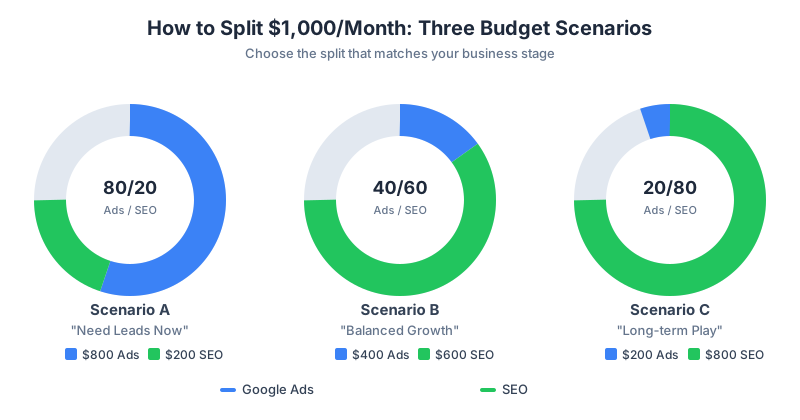
For most local businesses, the best strategy isn't choosing one or the other. It's figuring out the right mix based on where you are right now. Here are three scenarios with real budget allocations:
Scenario A: "I Need Leads Now"
$800 Google Ads / $200 SEO
You're new, you're hungry, and you need the phone to ring. Put the bulk of your budget into ads and use the remaining $200 for basic Google Business Profile optimization. Make sure your GBP listing is complete, your categories are right, you're posting regularly, and you're responding to reviews. That $200 in foundational SEO work costs almost nothing but sets you up for later.
Best for: New businesses, businesses entering a new market, companies with zero online presence.
Scenario B: "I Want Balanced Growth"
$400 Google Ads / $600 SEO
You have some presence online. Maybe a decent website and a handful of reviews. You need leads today, but you're also thinking about next year. Split the budget with a lean toward SEO. The $400 in ads keeps leads flowing while the $600 in SEO builds your organic foundation. Within 6 to 9 months, your organic leads start supplementing your paid leads, and you can shift more budget toward SEO.
Best for: Established businesses ready to grow, companies with some online presence, businesses in moderately competitive markets.
Scenario C: "I'm Playing the Long Game"
$200 Google Ads / $800 SEO
You already have some organic traffic and a solid review profile. Use $200 for highly targeted retargeting ads (showing ads to people who already visited your website but didn't convert) and put the rest into SEO. This is where compound growth really kicks in. Within a year, your organic traffic could be generating the majority of your leads.
Best for: Businesses with existing traffic, companies in less competitive markets, business owners willing to invest 6 to 12 months before seeing peak results.
Pro tip: Use your Google Ads data to make your SEO smarter. Your ad campaigns show you exactly which keywords drive calls and form submissions. Take those high-converting keywords and build dedicated content around them. You're using paid data to fuel organic strategy.
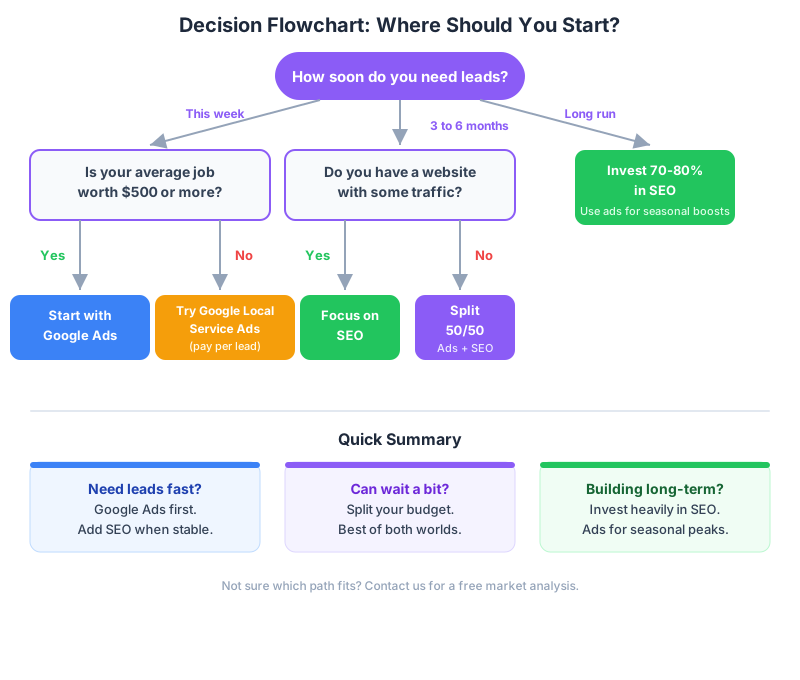
Decision Flowchart: Which Strategy Is Right for You?
Still not sure where to start? Walk through these questions:
How soon do you need leads?
If the answer is "this week," your next question is about your average job value. If your average job is worth $500 or more, start with Google Ads. The math works in your favor and you'll see returns quickly. If your average job is under $500, look into Google Local Service Ads (LSAs), which charge per lead instead of per click and can be more cost-effective for lower-ticket services.
If you can wait 3 to 6 months, consider whether you already have a website with some traffic. If yes, focus on SEO because you have a foundation to build on. If your website is brand new or barely gets visitors, split your budget 50/50 between ads and SEO so you get some leads coming in while building for the future.
If you're building for the long run and have the patience to invest, put 70% to 80% of your budget into SEO and use the rest for ads during seasonal peaks or to fill gaps.
Before spending a dollar on ads or SEO, make sure your website is ready to convert visitors. Our guide on what a business website should cost helps you evaluate whether your site is an asset or a liability. And if it has been a while since your last update, check the signs your site needs a redesign.
Common Mistakes That Waste Money
Before you spend a dollar on either strategy, make sure you're not setting yourself up to fail. These are the most common ways local businesses burn through marketing budgets:
Running Google Ads Without Conversion Tracking
If you don't know which keywords and ads are generating actual calls and form submissions, you're flying blind. You might be spending $500 a month on clicks that never turn into customers. Google Ads lets you track calls, form fills, and even in-store visits. If your ads manager isn't setting this up on day one, find a different ads manager.
Targeting Broad Keywords Instead of Local + Service Keywords
Bidding on "plumber" is expensive and wasteful. Bidding on "emergency plumber in [your city]" is targeted and effective. Local service businesses should always combine their service with their location. "Roof repair Arlington TX" will cost less and convert better than "roof repair" alone.
Hiring Cheap SEO That Builds Spammy Links
If someone offers you SEO for $200 a month, ask yourself what kind of work they can realistically do for that price. In many cases, ultra-cheap SEO providers use automated link-building tools that create low-quality backlinks from irrelevant websites. Google's algorithm is sophisticated enough to detect and penalize this. Bad SEO isn't just a waste of money. It can actively hurt your rankings.
Stopping SEO After 3 Months Because "Nothing Happened"
This is the single most common SEO mistake for local businesses. You pay for three months, don't see a flood of leads, and conclude that SEO doesn't work. But months 1 to 3 are foundation-building. The results come in months 4 to 12. Quitting at month 3 is like planting a garden, watering it for three weeks, and then ripping everything out because you don't have tomatoes yet.
Not Having a Mobile-Friendly, Fast Website
This one undermines both strategies. You can run perfect Google Ads and execute flawless SEO, but if your website takes 6 seconds to load on a phone, visitors leave before they ever see your phone number. Google's own data shows that 53% of mobile visitors abandon a site that takes longer than 3 seconds to load. Before investing in traffic, make sure your website can actually convert that traffic.
Ignoring Your Google Business Profile
Your Google Business Profile is free and often more impactful than paid ads for local searches. Our complete GBP optimization guide walks you through every step. For a broader local strategy, see the local SEO guide for service businesses.
Your Google Business Profile (the listing that shows up in Maps and local results) is free and incredibly powerful. Businesses with complete GBP listings, regular posts, responded-to reviews, and accurate service areas get more visibility in local search results. If you're spending $1,000 a month on marketing and haven't fully optimized your GBP, you're leaving free leads on the table.
The Bottom Line
There's no single right answer for every business. But there are clear guidelines based on real data:
If you need leads this month, start with Google Ads. The leads are more expensive on a per-lead basis, but they start immediately. One good job can cover your entire ad spend.
If you want to stop renting leads and start owning them, invest in SEO. It takes longer to pay off, but the returns compound over time. By year two, your cost per lead can drop to a fraction of what you'd pay through ads.
If you can afford a little patience, do both. Use ads for immediate revenue while SEO builds your long-term pipeline. Gradually shift your budget toward SEO as organic traffic grows.
The worst thing you can do is nothing. Your competitors are investing in one or both of these strategies right now. Every month you wait is a month they're pulling further ahead in search results and capturing the customers who are looking for exactly what you offer.
Start with whatever fits your timeline and budget. Measure the results. Adjust. The businesses that win at digital marketing aren't the ones that pick the perfect strategy on day one. They're the ones that start, track what works, and keep improving.
Want a custom ads-vs-SEO plan for your specific market and budget? Let us build one for you, or explore our digital marketing services to see how we help local businesses grow.
Frequently Asked Questions
Should I do Google Ads or SEO first? Start with Google Ads for immediate leads while building SEO for long-term compounding returns.
How much should I spend on Google Ads? Local service businesses typically start with $1,000-$2,000 per month in ad spend plus management.
Which has better ROI: Google Ads or SEO? SEO has higher long-term ROI. Google Ads delivers faster but stops working when you stop paying.
Can I run Google Ads myself? You can, but most businesses waste 30-50% of budget without professional campaign management.
How long until SEO beats Google Ads in leads? Typically 6-12 months before organic traffic generates comparable lead volume to paid campaigns.