
If you own a local service business, you already know the routine. Your phone rings, and it is another marketing agency promising to "fill your pipeline" or "dominate Google." They will happily take $3,000 a month from you. Or $5,000. Or $10,000. The number always seems to be "more than you are spending now."
Here is what they will not tell you: the right answer depends entirely on your situation, and for some businesses, the right answer is "less than you think."
This guide is not a sales pitch. It is a breakdown of what small businesses actually spend on marketing, what works, what does not, and how to avoid lighting money on fire. We are going to use real data, real benchmarks, and real math so you can make this decision for yourself.
The "5 to 10% of Revenue" Rule and Why It Is Incomplete
You have probably heard this guideline before. The U.S. Small Business Administration recommends that businesses with revenue under $5 million allocate 7 to 8% of gross revenue to marketing. That number comes up in nearly every article on this topic.
It is a reasonable starting point, but it misses important context.
Growth stage changes everything. A brand new plumbing company trying to build a customer base from zero needs to spend more aggressively, often 12 to 20% of revenue, just to establish a presence and start generating leads. A 15-year-old HVAC company with a strong referral network and repeat customers might only need 5 to 7% to maintain steady growth.
Industry competition matters. A personal injury law firm in Houston competing against firms spending $50,000 per month on Google Ads is in a completely different situation than a dentist in a small town with two competitors.
Your profit margins set the ceiling. A business running on 10% margins cannot afford to spend 10% on marketing. You need to know your actual numbers before committing to a budget.
The real question is not "what percentage should I spend?" but "where does each dollar go, and what does it bring back?"
What Small Businesses Actually Spend (Real Data)
Let's cut through the theory and look at what businesses are actually spending. These numbers come from industry surveys by Clutch, the CMO Survey, and data aggregated from platforms like WordStream and WebFX.
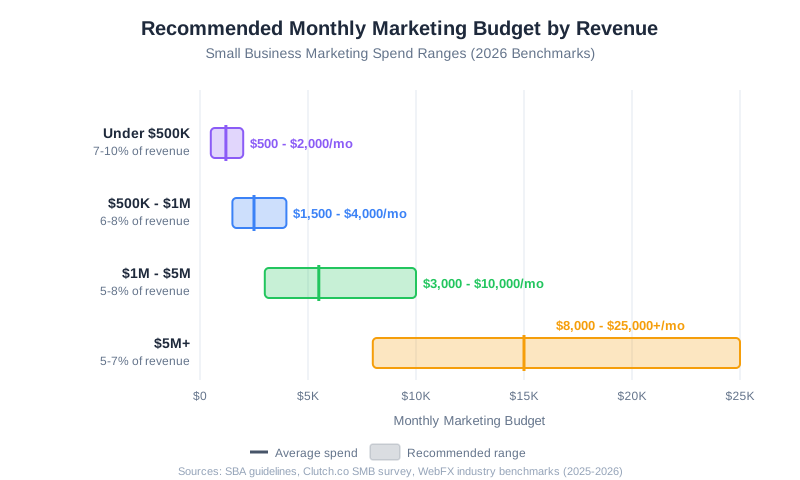
Businesses under $500K revenue: $500 to $2,000 per month (average $1,200). Most businesses at this level are doing basic local SEO, maybe running a small Google Ads campaign, and managing their own social media. This is "keep the lights on" marketing.
$500K to $1M revenue: $1,500 to $4,000 per month (average $2,500). At this level, businesses typically have a dedicated SEO provider and a real Google Ads budget. Some are investing in content marketing and email.
$1M to $5M revenue: $3,000 to $10,000 per month (average $5,500). These businesses are running multi-channel campaigns. They have a professional website, consistent content, active paid advertising, and usually some form of marketing analytics.
$5M+ revenue: $8,000 to $25,000 or more per month. At this level, marketing is a serious operational function. Businesses are investing in brand building, multiple advertising channels, marketing automation, and dedicated staff or agency partnerships.
Important context: these are averages. Some businesses at every revenue level spend significantly less and grow primarily through referrals, word of mouth, and reputation. Others spend more because they are in hyper-competitive markets or pursuing aggressive growth. Neither approach is wrong. The key is intentionality.
Where Your Money Should Go: Channel by Channel Breakdown
Every marketing channel has a different cost, a different timeline, and a different return. Here is what you need to know about each one.
1. Google Business Profile and Local SEO ($500 to $2,000 per month)
If you are a local service business and you do only one marketing activity, this is it. Full stop.
Your Google Business Profile (formerly Google My Business) is the single most important piece of digital real estate you own. When someone searches "plumber near me" or "HVAC repair in [your city]," the businesses that appear in the Google Maps 3-pack get the vast majority of clicks.
What you get: Visibility in Google Maps results, rankings for local search terms, more reviews, more phone calls.
What it costs: Basic optimization and management runs $500 to $800 per month. Comprehensive local SEO with content, link building, and citation management runs $1,000 to $2,000 per month.
ROI timeline: 3 to 6 months for meaningful organic traffic improvement. Your Google Business Profile can start generating calls much faster once optimized and actively managed.
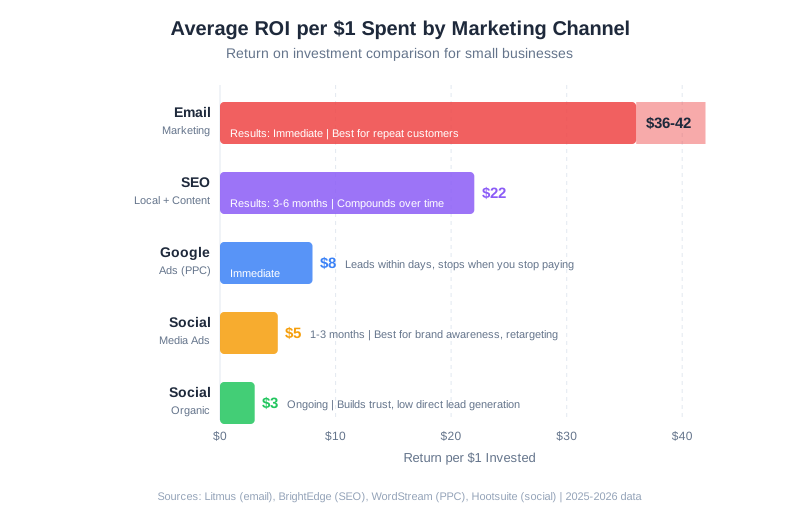
Average ROI: SEO delivers the highest long-term ROI of any paid marketing channel. Because organic traffic compounds over time, early investment continues paying returns years after the initial work.
Best for: Every single local business. There are no exceptions.
2. Google Ads ($500 to $3,000 per month ad spend plus management)
Google Ads puts you at the top of search results immediately. You pay every time someone clicks your ad, and costs vary dramatically by industry.
Average cost per click by industry:
- HVAC: $12 to $25
- Plumbing: $15 to $30
- Dental: $8 to $20
- Legal (personal injury, family law): $25 to $80
- Home remodeling: $10 to $25
- Auto repair: $6 to $15
What it costs: Ad spend is separate from management. A good PPC management fee runs $500 to $1,500 per month. Your actual ad spend goes on top of that.
ROI timeline: Immediate. You can have leads within the first week. However, campaigns need 2 to 3 months of optimization to reach peak efficiency.
Average ROI: $8 returned per $1 spent (WordStream benchmark). This varies enormously based on campaign quality and industry.
Best for: Businesses that need leads now, seasonal businesses ramping up, new businesses that cannot wait 6 months for SEO to kick in.
3. Social Media Marketing ($300 to $1,500 per month)
Social media is the channel most small businesses overspend on relative to what they get back. That is not because social media is bad. It is because it serves a different purpose than most business owners expect.
Organic social (posting content): Builds trust, keeps you top of mind, and gives potential customers something to look at when they check you out. It does not, for most service businesses, generate direct leads.
Paid social (Facebook and Instagram ads): Good for brand awareness, retargeting people who visited your website, and promoting special offers. The average return is $5 per $1 spent.
Not great for: Direct lead generation for service businesses. Nobody scrolls Instagram and thinks "I should hire a plumber today." People search Google when they need a plumber. They scroll social media when they are bored.
Good for: Restaurants, dentists, med spas, and businesses with strong visual appeal. Also useful for any business doing retargeting, where you show ads to people who already visited your website.
ROI timeline: 1 to 3 months for paid campaigns. Organic social is an ongoing trust-building exercise with indirect returns.
4. Website and Content Marketing ($500 to $2,000 per month)
Your website is the foundation everything else sits on. If your website is slow, outdated, or confusing, every dollar you spend on advertising is partially wasted because you are driving traffic to a destination that does not convert.
What this includes: Blog posts that answer customer questions (which helps your SEO), website speed and design improvements, landing page optimization, and conversion rate improvements.
What it costs: A good content writer producing 2 to 4 blog posts per month runs $500 to $1,200. Technical website optimization and updates add another $300 to $800 per month.
ROI timeline: Content marketing is a long game. Individual blog posts can start ranking in Google within 3 to 6 months and continue driving traffic for years. The ROI is indirect but compounds over time.
Best for: Businesses serious about long-term growth and reducing dependence on paid advertising.
5. Email Marketing ($100 to $500 per month)
Email is the most underrated channel for local service businesses. It is also the cheapest.
Average ROI: $36 to $42 per $1 spent (data from Litmus and DMA). That makes it the highest-ROI marketing channel available.
Why it works so well: You are talking to people who already know you and have used your services. The trust barrier is already gone.
What it costs: An email marketing platform (Mailchimp, Constant Contact) runs $20 to $100 per month depending on list size. Add $100 to $400 for someone to write and manage campaigns.
Examples that work:
- HVAC company sending "schedule your fall furnace tune-up" reminders to past customers
- Dentist sending 6-month cleaning reminders
- Auto repair shop sending seasonal maintenance tips with a booking link
- Restaurant sending weekly specials to loyalty members
Budget Scenarios: What to Do With $1K, $3K, $5K, and $10K per Month
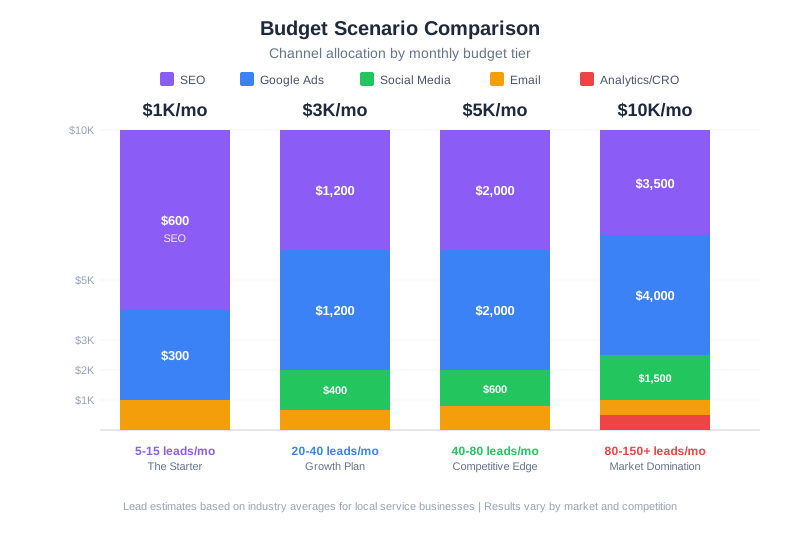
Theory is fine, but you need a concrete plan. Here are four budget tiers with specific allocations designed for local service businesses.
The Starter: $1,000 per Month
This budget is tight, and that is fine. The key is focusing your spend where it matters most instead of spreading thin.
| Channel | Monthly Spend | What You Get |
|---|---|---|
| Google Business Profile + Local SEO | $600 | Profile optimization, citation building, review strategy, basic on-page SEO |
| Google Ads | $300 | Tight targeting on high-intent keywords like "[service] + [city]" |
| Email Marketing | $100 | Email platform + monthly newsletter to past customers |
Who this is for: Solo operators, new businesses, or businesses with strong referral pipelines that need to supplement with digital leads.
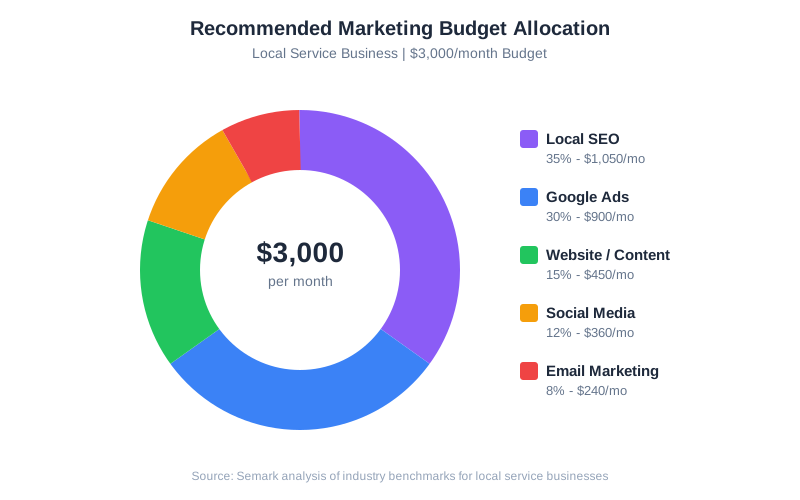
The Growth Plan: $3,000 per Month
At $3,000 per month, you have enough budget to build real momentum across multiple channels.
| Channel | Monthly Spend | What You Get |
|---|---|---|
| SEO + Content | $1,200 | Full local SEO, 2 blog posts per month, link building, technical optimization |
| Google Ads | $1,200 | Expanded keyword targeting, broader geographic reach, call-only ads |
| Social Media | $400 | Organic posting schedule + small paid ad budget for retargeting |
| Email Marketing | $200 | Automated sequences, monthly newsletter, review request campaigns |
Who this is for: Established businesses ready to grow, companies doing $500K to $2M in revenue, businesses in moderately competitive markets.
The Competitive Edge: $5,000 per Month
This is where you start pulling ahead of competitors who are only doing the basics.
| Channel | Monthly Spend | What You Get |
|---|---|---|
| SEO + Content Marketing | $2,000 | Aggressive content strategy, 4+ blog posts per month, advanced link building, competitor gap analysis |
| Google Ads | $2,000 | Comprehensive keyword coverage, Local Service Ads, display retargeting |
| Social Media | $600 | Professional content creation, paid campaigns, active community management |
| Email + CRM Tools | $400 | Marketing automation, segmented campaigns, lead nurturing sequences |
Who this is for: Businesses doing $1M to $5M in revenue, companies in competitive markets, businesses with growth targets that require consistent lead flow.
Market Domination: $10,000 per Month
At this level, you are investing in market leadership. This budget supports a comprehensive digital marketing operation.
| Channel | Monthly Spend | What You Get |
|---|---|---|
| SEO + Content | $3,500 | Full content team, video content, advanced technical SEO, authority building |
| Google Ads + Local Service Ads | $4,000 | Dominant ad presence across all relevant keywords and services |
| Social Media (paid + organic) | $1,500 | Professional video and photo content, multi-platform ad campaigns |
| Email + Automation | $500 | Full marketing automation, customer journey mapping, A/B testing |
| Analytics + CRO | $500 | Conversion rate optimization, call tracking, attribution modeling, monthly reporting |
Who this is for: Businesses doing $3M+ in revenue, multi-location operations, businesses in highly competitive markets (legal, medical, home services in major metros).
Not sure where your marketing dollars should go? Get a free marketing strategy session and we will build a custom budget plan for your business and goals.
Seven Common Budget Mistakes That Waste Your Money
After working with hundreds of small businesses, these are the patterns we see over and over again.
1. Spreading too thin across every channel. Putting $200 into SEO, $200 into Google Ads, $200 into Facebook, and $200 into email means nothing gets enough fuel to work. Pick two channels and fund them properly. You can expand later.
2. Spending $5,000 per month on ads with no tracking. If you do not know which ads generate calls, which calls become customers, and what each customer costs to acquire, you are flying blind. Call tracking and conversion tracking are not optional. They are the first thing you should set up.
3. Hiring the cheapest SEO provider. The agency offering SEO for $200 per month is not doing real SEO. At best, they are submitting your site to directories. At worst, they are using tactics that will get your site penalized by Google. Quality SEO requires real work, real expertise, and real time. If the price seems too good to be true, it is.
4. Ignoring your Google Business Profile. This is free. It is the number one driver of local visibility. Yet many business owners have not claimed their profile, have not added photos in years, and never respond to reviews. Before you spend a dollar on marketing, make sure your Google Business Profile is complete, accurate, and actively managed.
5. Paying for social media management when you need leads. If your immediate goal is more customers, social media management is not your highest-return investment. A curated Instagram feed does not pay the bills. Google Ads and local SEO generate leads. Social media builds brand awareness over time. Know what you need right now versus what would be nice to have.
6. Driving traffic to a bad website. If your website takes more than 3 seconds to load, does not work on mobile, or does not make it obvious how to contact you, every advertising dollar is partially wasted. Fix your website first, then invest in driving traffic to it.
7. Signing 12-month contracts with no performance benchmarks. Any agency worth working with should be willing to set measurable goals and report on them monthly. If they want a long-term contract with no performance clauses, that protects them, not you. Look for month-to-month agreements or short-term contracts (3 to 6 months) with clear performance expectations.
How to Know If Your Marketing Spend Is Working
You do not need a marketing degree to evaluate your results. You need two numbers: cost per lead and cost per customer.
Cost per lead = Total marketing spend divided by total leads generated. A "lead" is a phone call, form submission, or booked appointment from someone who found you through marketing.
Cost per customer = Total marketing spend divided by total new customers acquired. Not every lead becomes a customer, so this number is always higher than cost per lead.
Here are healthy benchmarks by industry, based on data from ServiceTitan, Scorpion, and WebFX:
| Industry | Cost per Lead | Cost per Customer |
|---|---|---|
| HVAC | $30 to $80 | $150 to $400 |
| Plumbing | $25 to $60 | $100 to $300 |
| Electrical | $25 to $70 | $120 to $350 |
| Dental | $50 to $150 | $200 to $500 |
| Legal (general practice) | $100 to $400 | $500 to $2,000 |
| Home remodeling | $40 to $100 | $200 to $600 |
| Auto repair | $20 to $50 | $80 to $250 |
| Restaurants | $10 to $30 | $15 to $50 |
How to evaluate your results:
- If your cost per lead is within the ranges above, your marketing is performing at an acceptable level.
- If your cost per lead is below these ranges, you are doing well. Consider increasing budget to scale what is working.
- If your cost per lead is significantly above these ranges, something is wrong. Either your targeting is off, your website is not converting, or you are spending on the wrong channels.
- If your cost per customer is healthy but you want more customers, increase budget on your best-performing channels first.
When You Should NOT Spend More on Marketing
This is the section most marketing articles do not include because it does not sell anything. But here is the truth.
Do not increase marketing spend if you cannot handle more customers. If your current team is already overbooked and you are turning away work, spending more on marketing generates leads you cannot serve. That wastes money and damages your reputation through poor response times.
Do not increase spend if you are not tracking results. Adding fuel to a fire you cannot see is how businesses burn through $50,000 with nothing to show for it. Get tracking in place first.
Do not increase spend if your close rate is the problem. If you are getting 50 leads per month but only closing 5 of them, you do not have a marketing problem. You have a sales problem. Fix your follow-up process, response time, and sales approach before buying more leads.
Do not increase spend if your reviews are terrible. Marketing drives people to look you up. If they find 2-star reviews and unanswered complaints, they are going to call your competitor instead. Get your reviews to 4+ stars before investing heavily in visibility.
For a complete walkthrough of every digital marketing channel and how they work together, read our complete digital marketing guide. If you are weighing the agency route, our agency vs in-house comparison has the real cost numbers.
Once you have set your budget, knowing how to measure your marketing ROI ensures every dollar is tracked and optimized.
The Bottom Line
There is no magic number. Anyone who tells you every business should spend exactly $X per month is either selling something or guessing.
The right marketing budget depends on your revenue, your growth goals, your competitive market, and how patient you are willing to be. Here is the most honest advice we can give:
- Start with what you can afford to lose for 6 months. Marketing is an investment with a delayed return. If losing your marketing budget for a few months would put you in financial trouble, start smaller.
- Focus before you diversify. Two well-funded channels will always outperform five underfunded ones. Start with Google Business Profile optimization and one other channel (usually Google Ads or content-driven SEO).
- Measure everything. Set up call tracking, enable conversion tracking in Google Ads, and review your numbers monthly. The data will tell you where to spend more and where to cut.
- Cut what does not work. If a channel has not produced measurable results after 4 to 6 months (3 months for paid advertising), stop spending there and reallocate.
- Double down on what does. When you find a channel that consistently generates leads at a healthy cost, increase your investment there before experimenting with something new.
Want help building a marketing budget that matches your growth goals? Schedule a free consultation and we will create a custom budget recommendation, or explore our digital marketing services to see what we offer.
Frequently Asked Questions
What percentage of revenue should go to marketing? Most small businesses allocate 7-12% of gross revenue to total marketing spend.
What is the minimum digital marketing budget? Start with at least $1,500 per month to see meaningful results from any single channel.
Where should I spend my first marketing dollar? Google Business Profile optimization and basic SEO - both are free and high-impact for local businesses.
Is $500/month enough for digital marketing? For DIY efforts, yes. For professional services, $500 limits you to one channel at minimal scope.
When should I increase my marketing budget? When your current channels consistently deliver positive ROI and you have capacity for more clients.