How Much Does a Website Cost for Small Business in 2026? (Honest Pricing Breakdown)
You have probably searched this question a dozen times already. And every article you found gave you the same useless answer: "It depends."
Thanks. Very helpful.
Here is the problem. Most articles about website pricing are written by agencies trying to sell you something, or by content farms that have never actually built a website for a real business. They give you ranges so wide they are meaningless ("anywhere from $500 to $100,000") and then tell you to "contact us for a quote."
If you run a plumbing company, an HVAC business, a dental practice, or a law firm, you do not have time for that. You want to know what a website actually costs, what you get at each price point, and what makes sense for your specific situation.
So here it is. Real numbers, real tradeoffs, no sales pitch.
The 4 Website Tiers (With Real 2026 Pricing)
Not all websites are created equal. The price you pay depends on how the site is built, who builds it, and what it can do for your business. Here are the four main tiers, with actual pricing you will encounter in 2026.
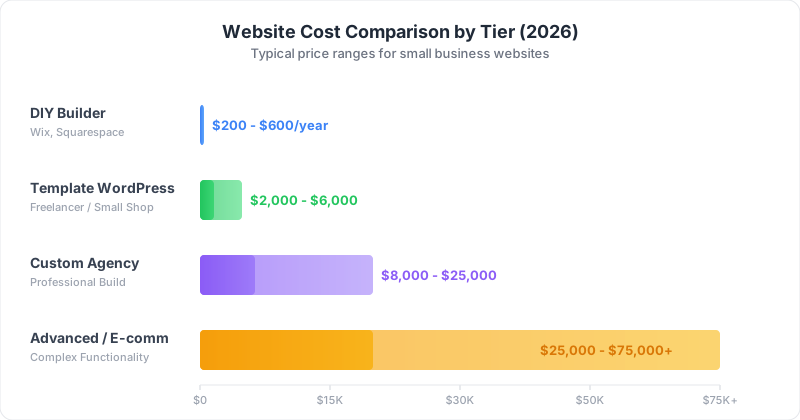
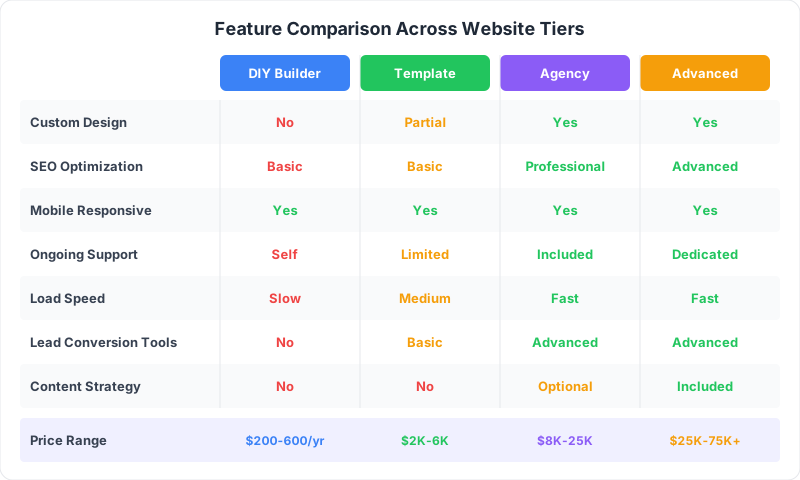
Tier 1: DIY Website Builders ($15 to $50/month)
Platforms: Wix, Squarespace, GoDaddy Website Builder, Weebly
What you actually pay:
- Wix Business plan: $17/month (billed annually)
- Squarespace Business plan: $33/month (billed annually)
- GoDaddy Website Builder: $21/month (billed annually)
- That works out to roughly $200 to $600 per year, all in
- A drag-and-drop editor you can use yourself
- Hosting included
- Basic templates (often designed for general use, not your specific industry)
- A free SSL certificate
- Limited storage and bandwidth
- Real search engine optimization (the built-in "SEO tools" are extremely basic)
- Custom design that matches your brand
- Fast page loading speeds (these builders add a lot of code bloat)
- Full ownership of your site (you are renting, not owning)
- Advanced lead capture or conversion tools
Bad for: Any business that relies on Google searches to find new customers. If someone searches "HVAC repair near me" and you want to show up, a Wix site will struggle to compete against properly built websites. The templated structure, slower load times, and limited SEO controls put you at a real disadvantage.
The honest truth: DIY builders are fine for a hobby or side project. For a real business that depends on being found online, they are a temporary solution at best.
Tier 3: Custom Agency Website ($8,000 to $25,000)
Built by: A professional web design agency with a team (designer, developer, SEO specialist, project manager)
What you actually pay:
- Design and development: $8,000 to $25,000 (one-time)
- Ongoing support/maintenance: typically $100 to $300/month
- Hosting: often included in the maintenance plan
- Custom design built specifically for your business and your customers
- Strategic page structure designed to convert visitors into leads
- Professional SEO foundation (keyword research, optimized page titles, schema markup, site speed optimization)
- Mobile-first design that loads fast
- Integration with your tools (Google Business Profile, booking software, CRM)
- A revision process with defined rounds of feedback
- Training on how to make basic updates yourself
- Ongoing support when something breaks or needs changing
Good for: Businesses that are serious about growth and want their website to be a lead generation tool, not just a digital business card. If you are spending money on Google Ads or SEO, this is the tier where your website can actually support those investments.
Bad for: Very small businesses with tight budgets who just need something basic online.
Your website is just one piece of your digital presence. For the full picture of what to budget, see how much small businesses should spend on digital marketing.
Hidden Costs Nobody Tells You About
Here is where most pricing articles fail you. They talk about the upfront cost and ignore everything else. But a website is not a one-time purchase. It is more like a vehicle. You pay for the truck, and then you pay for gas, insurance, maintenance, and the occasional repair.
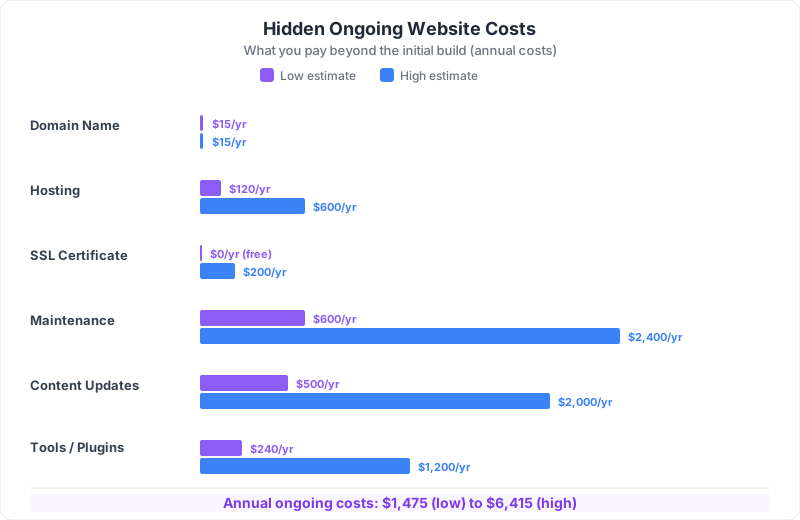
Let's break down the real ongoing costs:
Domain Name: $12 to $20/year
Your domain (like yourbusiness.com) is a yearly rental. Buy it through Google Domains, Namecheap, or Cloudflare Registrar. Do not buy it through your web designer. You want to own this yourself, always. If you ever switch providers, you need to control your domain.Web Hosting: $120 to $600/year
Hosting is where your website files live. You get what you pay for.- Cheap shared hosting ($3 to $5/month): Your site shares server space with hundreds of other websites. When one of those sites gets a traffic spike, yours slows down. If you are a contractor and a potential client pulls up your site on their phone and it takes 8 seconds to load, they are going to call your competitor instead.
- Quality managed hosting ($25 to $50/month): Dedicated resources, automatic backups, better security, faster speeds. Companies like Cloudways, WP Engine, or Kinsta fall in this range.
SSL Certificate: $0 to $200/year
SSL is what puts the padlock icon in the browser and makes your address start with "https." Most quality hosting providers include a free SSL certificate through Let's Encrypt. Some businesses, especially those handling sensitive data, may want an extended validation certificate, which runs $50 to $200/year. For most local service businesses, the free option is perfectly fine.Professional Photography: $200 to $500 (one-time)
Stock photos of people in hard hats smiling at clipboards do not build trust. Real photos of your team, your work, and your equipment make a huge difference. A local photographer charging $300 to $500 for a half-day shoot is one of the best investments you can make. Alternatively, a curated set of high-quality stock images runs $100 to $300.Content Writing: $500 to $2,000 (one-time)
If you can write your own service pages, great. Most business owners cannot, and that is fine. A professional copywriter who understands local service businesses will charge $500 to $2,000 to write the core pages of your site. This is money well spent, because the words on your website directly affect whether people call you or click away.Ongoing Maintenance: $50 to $200/month
WordPress sites need regular updates to stay secure and functional. Someone needs to:- Update WordPress core, themes, and plugins (monthly)
- Monitor for security vulnerabilities
- Run backups and test that they work
- Fix anything that breaks
Plugin and Tool Subscriptions: $20 to $100/month
Modern websites rely on tools:- Contact form with spam protection: $0 to $10/month
- Online booking/scheduling: $15 to $50/month
- Live chat widget: $15 to $50/month
- Analytics and tracking: $0 to $50/month (Google Analytics is free, but some businesses add paid tools)
The Real Total
When you add it all up, expect to spend $1,500 to $6,400 per year on ongoing website costs after your initial build. This is true regardless of which tier you chose for the initial build. A $300 Wix site and a $15,000 custom site both need hosting, maintenance, and tools.When Cheap Costs You More
This is not scare tactics. These are patterns we see repeatedly with businesses that try to cut corners on their website.
The HVAC company that paid twice
A heating and cooling company in a mid-size market paid a friend's kid $500 to build them a website. It looked okay on a laptop, but it was painfully slow on mobile, had no SEO structure, and the contact form broke after three months. For two years, they wondered why they never got leads from their website while their competitors with professional sites were booked solid. They eventually paid $8,500 to have it rebuilt properly. Total cost: $9,000, plus two years of lost leads.The dentist losing mobile patients
A dental practice had a template website that scored 35 out of 100 on Google's mobile speed test. In their market, over 60% of people searching for a dentist were on their phone. Google shows that 53% of mobile visitors leave a site that takes longer than 3 seconds to load. That slow site was turning away nearly half their potential new patients before they ever saw the office photos or the list of services.The contractor who lost a $50,000 job
A remodeling contractor bid on a high-end kitchen renovation. The homeowner told him later that they almost did not call because his website looked "unprofessional" compared to two other contractors they were considering. He got the job because of a personal referral, but how many other potential clients just moved on without ever picking up the phone? When your website looks like it was built in 2015, customers assume your work might be just as outdated.The lesson: your website is often the first impression someone has of your business. If you would not show up to a job site in a rusted-out van with a misspelled logo, do not show up online with a cheap, broken website.
What You Actually Need (Based on Your Business Type)
Not every business needs the same features. Here is what matters most for each common type of local service business.
Plumber, HVAC Technician, or Electrician
Must-haves:- Click-to-call button prominently displayed (most of your leads come from phone calls)
- Service area pages optimized for each city or neighborhood you serve
- Emergency service callout on every page
- Google Business Profile integration
- Fast mobile loading speed (people with a burst pipe are searching on their phone, not a desktop)
- Customer reviews displayed on the site
Dentist or Medical Practice
Must-haves:- Online appointment booking
- New patient forms (downloadable or fillable)
- Provider bios with photos and credentials
- Insurance information page
- HIPAA-compliant contact forms (standard contact forms are not HIPAA-compliant)
- Before/after gallery for cosmetic services
Contractor, Remodeler, or Carpenter
Must-haves:- Project portfolio with high-quality before/after photos
- Service descriptions with enough detail that customers understand what you offer
- Project estimate request form
- Testimonials from past clients
- Licensing and insurance information prominently displayed
Law Firm
Must-haves:- Practice area pages (one page per area of law, not a single list)
- Attorney bio pages with professional headshots
- Case results or testimonials (within bar association guidelines)
- Free consultation booking
- Blog or resource center for SEO (legal searches are extremely competitive)
- SSL and security emphasis (clients expect confidentiality signals)
Restaurant or Cafe
Must-haves:- Menu that is easy to read on mobile (not a PDF, which is a terrible experience on phones)
- Online ordering integration (through a service like Toast, Square, or ChowNow)
- Location, hours, and a map
- High-quality food photography
- Reservation system if applicable
Not sure what level of investment makes sense for your business? Talk to our team for a free website consultation and we will give you an honest recommendation based on your goals and budget.
How to Evaluate Website Quotes
When you start reaching out to designers and agencies, you will get proposals that range from one paragraph to twenty pages. Here is how to evaluate them.
What a Good Proposal Includes
- Clear scope: A specific list of pages and features, not vague descriptions like "a modern, responsive website"
- Timeline: A realistic schedule with milestones. A 5 to 10 page site typically takes 6 to 12 weeks from start to launch
- Revision rounds: How many rounds of design revisions are included (two to three is standard)
- Content responsibility: Who is writing the text? Who is providing photos? This should be spelled out clearly
- What happens after launch: Is maintenance included? For how long? What does it cost after that?
- Ownership: You should own your website files, your domain, and your content. Ask this directly
- Payment schedule: A common structure is 50% upfront and 50% at launch, or thirds (at signing, at design approval, at launch)
Red Flags to Watch For
- "SEO included" without specifics. Every agency says this. Ask them exactly what SEO work they will do. If they cannot list specific deliverables (keyword research, meta tag optimization, schema markup, page speed optimization, XML sitemap), they are probably just installing an SEO plugin and calling it done.
- No timeline at all. A proposal without dates or milestones means the project will drag on indefinitely.
- Extremely low price with no explanation. If someone quotes you $800 for a custom website, they are either using a template and calling it custom, outsourcing to the cheapest labor they can find, or planning to charge you heavily for every small change after launch.
- They do not ask about your business. A good agency asks about your customers, your competitors, and your goals before proposing anything. If someone sends a quote after a 10-minute conversation, they are selling a product, not a solution.
- No portfolio or references. Ask to see websites they have built for businesses similar to yours. Then actually visit those sites. Check if they load fast, look professional on your phone, and if the businesses are still using them.
- They want to own your domain. Never agree to this. Your domain name should be registered in your name, with your email address, through a registrar you control.
Questions to Ask Before Signing
- "What platform will you build on, and why?"
- "Who handles updates and maintenance after launch?"
- "What happens if I want to switch to a different provider later? Will I own all the files?"
- "Can you show me speed test results for sites you have built?"
- "What is your process if something breaks after launch?"
- "How do you handle content, and will you write it or do I need to provide it?"
For businesses that want their website to actively generate revenue, our article on turning your website into a lead generation machine covers the exact playbook.
The Bottom Line
Here is the summary, as straightforward as we can make it:
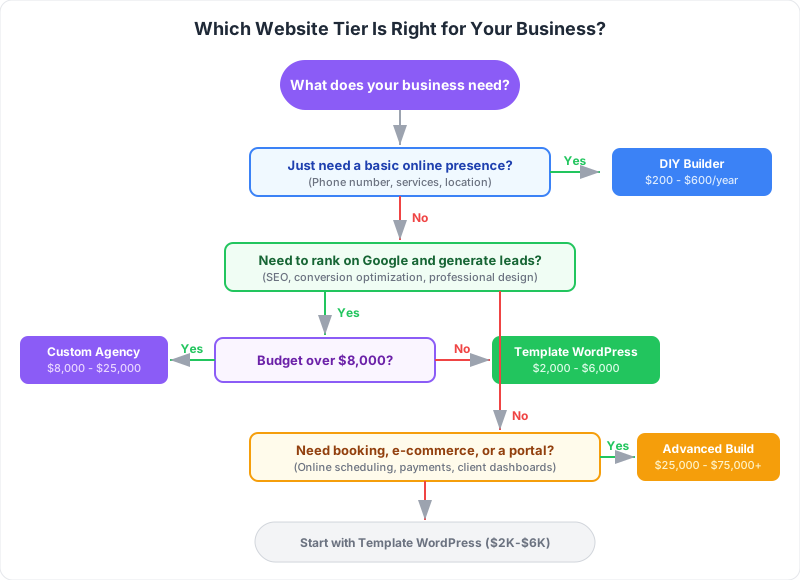
| Business Stage | Recommended Tier | Budget Range | Best For |
|---|---|---|---|
| Just starting out, testing the waters | DIY Builder | $200 to $600/year | Solo operators, side businesses |
| Established, need a professional presence | Template WordPress | $2,000 to $6,000 + hosting | Businesses with referral-based growth |
| Ready to grow, need leads from Google | Custom Agency | $8,000 to $25,000 | Businesses investing in marketing |
| Complex needs, multiple locations | Advanced Build | $25,000 to $75,000+ | Multi-location, e-commerce, portals |
If you are a dentist or lawyer, your market is more competitive online, and your compliance requirements are stricter. Budget $12,000 to $22,000 for a site that meets both marketing and regulatory needs.
If you are a contractor or remodeler, your website is your portfolio. If you have great photos of your work and strong referrals, a $3,000 to $5,000 template site can work well. If you need to generate new leads, invest in a custom build.
The most important thing is this: your website is not an expense. It is a tool. A $12,000 website that brings in two new HVAC installations per month at $8,000 each pays for itself in the first week. A $300 website that brings in nothing is the most expensive option of all.
Choose the tier that matches where your business is today and where you want it to be in two years. And whatever you do, make sure you own your domain, understand your ongoing costs, and have a plan for keeping the site maintained and updated.
Your website works for you 24 hours a day, 7 days a week. Make sure it is actually good at its job.
Ready to invest in a website that actually pays for itself? Get in touch with our team for a transparent quote with no surprises, or explore our web development services to see what we deliver at every price point.
Frequently Asked Questions
How much does a basic business website cost? A professional 5-10 page business website typically costs $3,000-$8,000 with an agency.
Is Squarespace or Wix good enough for business? For simple brochure sites, yes. For lead generation and SEO, custom builds perform significantly better.
Why do website prices vary so much? Complexity, custom design, functionality, content creation, and ongoing support all affect pricing.
Should I pay monthly or one-time for a website? One-time builds give you ownership. Monthly subscriptions include hosting but create platform dependency.
How much does website maintenance cost? Budget $100-$500 per month for hosting, security updates, backups, and minor content changes.