
Your Brand Is More Than Your Logo
Let us get this out of the way: your brand is not your logo. Your logo is part of your brand, but your brand is the entire experience someone has with your business - from the first Google search to the final invoice.
Brand = Perception. It is what people think, feel, and say about your business when you are not in the room.
For growing businesses, branding often gets pushed to "later" - after the website, after the marketing, after the revenue is flowing. But investing in your brand at the right time can accelerate everything else: your marketing converts better, your website looks more professional, your sales process is smoother, and you attract better clients.
What Branding Actually Includes
Brand Strategy
The thinking behind the visuals. This defines:- Brand positioning - How you are different from competitors
- Target audience - Who you are trying to reach and what they care about
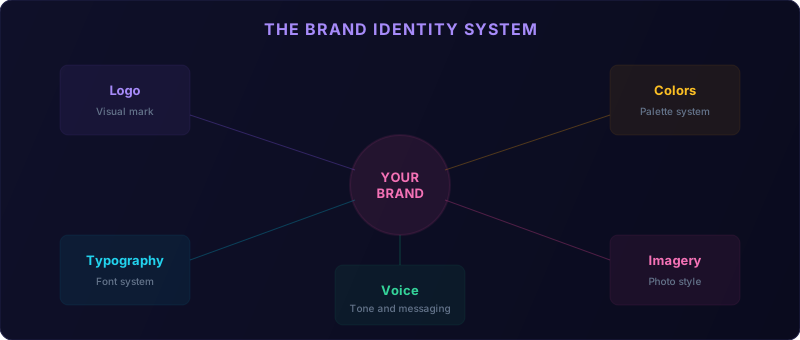
- Brand voice - How you communicate (formal vs casual, technical vs accessible)
- Value proposition - Why someone should choose you over the alternatives
- Brand story - The narrative that gives your business meaning and memorability
Brand Identity (The Visual System)
The tangible design elements:- Logo - Primary mark, secondary mark, icon/favicon
- Color palette - Primary, secondary, and accent colors with exact hex/RGB values
- Typography - Font families for headings, body text, and accents
- Imagery style - Photography direction, illustration style, icon style
- Brand patterns and textures - Supporting visual elements
Brand Collateral
The real-world applications:- Business cards and stationery
- Email signatures
- Social media templates
- Presentation decks
- Proposal and invoice templates
- Signage and environmental design
Brand Guidelines
A document that codifies everything above so anyone creating content for your brand maintains consistency. This is especially important when working with agencies, freelancers, or as your team grows.For a deep dive on the design elements specifically, our article on brand identity design covers the visual system in detail.
When Do You Need Professional Branding?
Signs It Is Time
- You are embarrassed by your visuals. If you cringe when handing out a business card or sending a proposal, your brand is hurting you.
- Your marketing is not converting. Great marketing on top of weak branding is like putting a turbocharger on a car with flat tires. If your digital marketing strategy is solid but results are underwhelming, branding could be the missing piece.
- You are competing for bigger clients. Enterprise clients evaluate vendors partly on perceived professionalism. A polished brand signals that you are serious and established.
- You have outgrown your DIY logo. The Canva logo that worked when you started feels amateur next to your competitors.
- Your brand is inconsistent. Different colors on your website vs social media vs business cards. Different tones in your emails vs your blog. Inconsistency erodes trust.
- You are entering a new market. A rebrand or brand refresh can reposition your business for a new audience or expanded service offering.
When to Wait
- You are still figuring out your service offering (branding solidifies positioning - you need positioning first)
- Revenue is under $100K and every dollar needs to go into lead generation
- You are a solopreneur and personal branding is more appropriate than business branding
What Does Branding Cost?
| Scope | Cost Range | What You Get |
|---|---|---|
| Logo only (freelancer) | $300-1,500 | Logo in various formats |
| Logo + basic identity | $1,500-5,000 | Logo, colors, typography, basic guidelines |
| Full brand identity | $5,000-15,000 | Strategy, logo, full visual system, guidelines, templates |
| Comprehensive rebrand | $15,000-50,000+ | Strategy, research, identity, collateral, brand guidelines book |
The Branding Process (What to Expect)
Here is what to expect at each branding investment level:
| Investment Level | Timeline | What You Get | Best For |
|---|---|---|---|
| $300-1,500 | 1-2 weeks | Logo only (2-3 concepts, 1-2 revisions) | Startups, solopreneurs |
| $1,500-5,000 | 2-4 weeks | Logo + basic identity (colors, fonts, simple guide) | Small businesses |
| $5,000-15,000 | 4-8 weeks | Full brand identity (strategy, logo, visual system, guidelines, templates) | Growing businesses |
| $15,000-30,000 | 6-12 weeks | Comprehensive rebrand (research, strategy, identity, all collateral, brand book) | Established companies |
| $30,000-50,000+ | 8-16 weeks | Enterprise branding (multi-market, sub-brands, extensive research, rollout plan) | Multi-location businesses |
Phase 1: Discovery (1-2 weeks)
- Brand audit (reviewing current materials and positioning)
- Competitor analysis
- Target audience research
- Stakeholder interviews
- Brand positioning workshop
Phase 2: Strategy (1-2 weeks)
- Brand positioning statement
- Messaging framework
- Voice and tone guidelines
- Creative direction
Phase 3: Design (2-4 weeks)
- Logo concepts (typically 3 directions)
- Revision rounds (2-3)
- Color palette development
- Typography selection
- Supporting visual elements
Phase 4: System Build (1-2 weeks)
- Brand guidelines document
- Template creation (social, presentations, documents)
- File package (all logos, colors, fonts in every format)
Phase 5: Implementation (Ongoing)
- Website redesign aligned with new brand
- Marketing collateral updates
- Social media profile updates
- Internal communications alignment
Brand Identity Elements That Matter Most
Logo
Your logo needs to work everywhere - tiny on a phone screen, large on a billboard, in color and black-and-white. The best logos are:- Simple - Can be drawn from memory
- Versatile - Works in any size and context
- Timeless - Will not look dated in 5 years
- Relevant - Connects to your industry or values
- Primary logo (full lockup with text)
- Secondary logo (simplified version)
- Icon/mark (for favicons, social profiles, app icons)
- Monochrome versions (black on white, white on dark backgrounds)
Color Palette
Colors trigger emotions and associations. Choose intentionally:- Blue - Trust, professionalism, reliability (most popular for B2B)
- Green - Growth, health, sustainability
- Red/Orange - Energy, urgency, passion
- Purple - Creativity, premium, innovation
- Black - Sophistication, luxury, authority
- 1-2 primary colors (your main brand colors)
- 2-3 secondary colors (for variety and hierarchy)
- Neutral colors (for backgrounds and text)
Typography
Fonts communicate personality:- Serif fonts (Times, Georgia) - Traditional, trustworthy, editorial
- Sans-serif fonts (Helvetica, Inter) - Modern, clean, approachable
- Display fonts - For headlines and special use only
Brand Voice
How you write is as important as how you look. Define your voice with spectrums:- Formal ←→ Casual
- Technical ←→ Accessible
- Serious ←→ Playful
- Traditional ←→ Innovative
Branding and Your Website
Your website is the single most important expression of your brand. When you invest in branding, a website update should follow. A beautiful brand identity applied to an outdated website creates a jarring disconnect.
If your website needs work, our web development services guide covers what to expect. And if you are unsure whether a redesign is needed, check 10 signs your website needs a redesign.
Branding and Your Marketing
The measurable impact of strong branding on marketing:
| Marketing Channel | Without Strong Brand | With Strong Brand | Improvement |
|---|---|---|---|
| Website conversion rate | 1-2% | 3-5% | 2-3x |
| Email open rate | 15-20% | 25-35% | 50-75% |
| Social media engagement | 1-2% | 3-6% | 2-3x |
| Cost per lead (paid ads) | $50-100 | $25-60 | 30-50% lower |
| Client retention rate | 60-70% | 80-90% | 15-25% higher |
| Referral rate | 10-15% | 25-40% | 2-3x |
| Ability to charge premium | Baseline | 15-30% premium | Significant |
Strong branding amplifies every marketing channel:
- SEO and content - Consistent brand voice builds authority and trust
- Social media - Recognizable visual identity increases engagement and recall
- Email marketing - Branded templates look professional and build familiarity
- Paid ads - Strong creative stands out in crowded feeds
- Sales process - Polished proposals and presentations close deals
DIY vs Professional Branding
DIY Is Reasonable When:
- You are pre-revenue or very early stage
- You have design skills or a team member who does
- You understand the limitations and plan to invest later
Go Professional When:
- You are competing against professionally branded businesses
- Your current brand is holding you back
- You are investing in marketing and want maximum ROI
- You are positioning for higher-value clients or partnerships
The Middle Ground
Some businesses start with a professional logo and basic identity ($1,500-3,000) and expand into full branding later as revenue grows. This is a valid approach - better than DIY, more affordable than a full engagement.A strong brand amplifies every marketing channel. To see how branding connects to your broader growth strategy, read our complete digital marketing guide. And when you are ready to put your brand online, our web development services guide covers what to expect.
Common Branding Mistakes
- Designing by committee - Too many opinions create bland, unfocused brands. Designate one decision-maker.
- Following trends - Trendy designs look dated fast. Choose timeless over trendy.
- Inconsistency - Using different colors, fonts, or tones across channels. This is what brand guidelines prevent.
- Copying competitors - You want to be differentiated, not derivative.
- Skipping strategy - Going straight to logo design without defining positioning, audience, and voice.
- Changing too often - Strong brands are built through repetition. Give your brand time to build recognition before tweaking.
Not sure where your brand stands? Schedule a free brand audit and we will assess your current identity and recommend next steps.
Your Branding Action Plan
Right now: Audit your current brand. Is it consistent? Professional? Differentiated?
If your brand is weak:
- Define your positioning (who you serve, how you are different)
- Invest in at least a professional logo and basic visual identity
- Create a simple brand guide to maintain consistency
- Apply the new brand to your website first, then marketing channels
- Ensure brand guidelines are documented and shared
- Review consistency across all touchpoints quarterly
- Consider a refresh (not overhaul) every 3-5 years
Frequently Asked Questions
When does a small business need professional branding? When your visuals embarrass you, marketing underperforms, or you are competing for larger clients.
How much does professional branding cost? Logo and basic identity runs $1,500-$5,000. Full brand systems cost $5,000-$15,000 for growing businesses.
What is the difference between branding and a logo? A logo is one visual element. Branding encompasses strategy, positioning, voice, visuals, and customer experience.
How long does a branding project take? A complete brand identity project typically takes 4-8 weeks from discovery to final deliverables.
Can I rebrand without losing existing customers? Yes. A thoughtful transition with clear communication actually strengthens customer relationships and perception.