
Why Digital Marketing Is Non-Negotiable for Small Business
Ten years ago, a small business could survive on word of mouth and a Yellow Pages listing. That era is over. Today, 98% of consumers use the internet to find information about local businesses (BrightLocal Local Consumer Review Survey), and your competitors are already investing in digital channels to capture that demand.
But here is the good news: digital marketing levels the playing field. A well-executed strategy lets a five-person agency compete with firms ten times its size - if you know where to focus your budget and energy.
This guide covers every major digital marketing channel, how they work together, and how to build a strategy that actually drives revenue - not just vanity metrics.
The Five Pillars of Small Business Digital Marketing
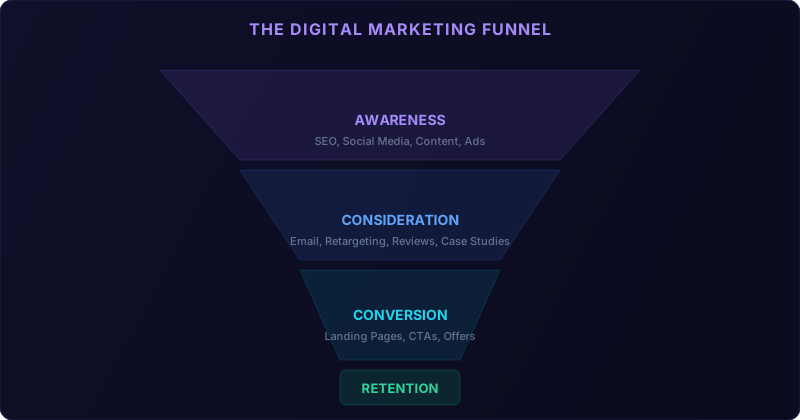
Here is how the five core channels compare at a glance:
| Channel | Time to Results | Monthly Cost | Best For |
|---|---|---|---|
| SEO | 3-6 months | $1,000-3,000 | Long-term organic traffic |
| Paid Ads (PPC) | 1-7 days | $1,000-5,000+ | Immediate leads |
| Social Media | 2-4 months | $500-2,500 | Brand awareness and trust |
| Email Marketing | 1-2 months | $0-500 | Nurturing leads to customers |
| Content Marketing | 3-6 months | $1,000-3,000 | Authority and SEO fuel |
1. Search Engine Optimization (SEO)
SEO is the foundation. When someone searches "web development agency near me" or "best digital marketing for small business," you want your website to appear - without paying for every click.
What SEO involves:
- On-page SEO: Optimizing your titles, headings, meta descriptions, and content around keywords your audience actually searches for
- Technical SEO: Making sure your site loads fast, is mobile-friendly, has clean URLs, and can be crawled by search engines. Our technical SEO audit checklist breaks this down step by step.
- Local SEO: Claiming and optimizing your Google Business Profile, building local citations, and earning reviews. This is critical for service businesses - read our complete local SEO guide for the full playbook.
- Content SEO: Publishing helpful, keyword-targeted content that answers your audience's questions
2. Paid Advertising (PPC)
While SEO builds over time, paid ads deliver immediate visibility. Google Ads and Meta Ads (Facebook/Instagram) are the two dominant platforms for small business.
When to use paid ads:
- You need leads or sales now, not in six months
- You are launching a new service or product
- You want to test messaging before investing in long-form content
- Your SEO is strong but you want to dominate the entire first page
Common mistakes:
- Running ads without conversion tracking (you are flying blind)
- Targeting too broadly (waste) or too narrowly (no volume)
- Sending ad traffic to your homepage instead of a dedicated landing page
3. Social Media Marketing
Social media is not about going viral - it is about staying visible and building trust. For most small businesses, the goal is consistent presence, not content that gets millions of views.
Platform priorities for B2B service businesses:
- LinkedIn: Best for thought leadership and B2B lead generation
- Instagram: Best for visual branding and local discovery
- Facebook: Still valuable for local community engagement and ads
- TikTok: Growing for educational content, but requires consistent video
For strategy fundamentals, our social media marketing strategy guide covers what actually drives growth.
4. Email Marketing and Automation
Email remains the highest-ROI digital marketing channel at $36 returned for every $1 spent. Yet most small businesses either do not collect emails or send generic blasts that go straight to spam.
The basics you need:
- A lead magnet (free resource, audit, consultation) to collect emails
- A welcome sequence that introduces your business and builds trust
- Regular newsletters with genuinely useful content (not just promotions)
- Automated follow-ups for abandoned forms, past clients, and leads that went cold
5. Content Marketing
Content marketing ties everything together. Your blog posts fuel SEO. Your case studies close deals. Your guides generate email subscribers. Your social posts drive traffic back to your site.
Content that works for small businesses:
- How-to guides targeting questions your customers ask (like this one)
- Comparison articles that help buyers make decisions
- Case studies showing real results with real numbers
- FAQ-style posts that build topical authority
How Much Does Digital Marketing Cost?
This is the first question every business owner asks, and the answer is frustratingly variable: $1,500 to $10,000+ per month depending on channels, competition, and whether you hire in-house or work with an agency.
Here is a rough breakdown:
| Channel | DIY Cost/Month | Agency Cost/Month |
|---|---|---|
| SEO | $0-500 (tools) | $1,000-3,000 |
| Google Ads | $500-2,000 (ad spend) | $1,000-3,000 + ad spend |
| Social Media | $0-200 (tools) | $800-2,500 |
| Email Marketing | $0-100 (platform) | $500-1,500 |
| Content Creation | $0 (your time) | $1,000-3,000 |
The agency-vs-DIY decision is bigger than just cost. There are hidden costs to doing it yourself (your time, learning curve, mistakes) and hidden benefits of hiring experts (speed, expertise, tools). We break down that decision in agency vs in-house: which is right for your business.
Building Your Digital Marketing Strategy: A Step-by-Step Framework

Step 1: Define Your Goals
Do not start with "we need to be on social media." Start with business outcomes:
- How many new clients do you need per month?
- What is a client worth over their lifetime?
- What is your current cost per acquisition?
Step 2: Know Your Audience
Build a simple profile of your ideal customer:
- What do they search for when they have the problem you solve?
- Where do they spend time online?
- What objections do they have before buying?
Step 3: Audit Your Current Presence
Before adding new channels, fix what is broken:
- Is your website fast, mobile-friendly, and converting visitors? If not, it might be time for a redesign.
- Is your Google Business Profile claimed and optimized?
- Are you tracking conversions, or just traffic?
Step 4: Pick Two Channels and Go Deep
The biggest mistake small businesses make is trying to do everything at once. Pick two channels based on your goals:
- Need leads now? Google Ads + Landing Pages
- Building for the long term? SEO + Content Marketing
- Local service business? Local SEO + Google Business Profile
- Visual product/service? Instagram + Email Marketing
Step 5: Measure What Matters
The only metrics that matter are the ones tied to revenue:
- Cost per lead - What are you paying to get someone into your pipeline?
- Conversion rate - What percentage of leads become customers?
- Customer lifetime value - How much does a customer spend over their relationship with you?
- Return on ad spend (ROAS) - For every dollar in ads, how many dollars come back?
The Role of AI in Digital Marketing
Here is how AI is impacting each marketing channel:
| Channel | AI Application | Impact Level | Adoption Difficulty |
|---|---|---|---|
| SEO | Content optimization, keyword clustering | High | Low |
| Paid Ads | Automated bidding, audience targeting | Very High | Low |
| Social Media | Content generation, scheduling, analytics | Medium | Low |
| Subject line optimization, send-time prediction | High | Low | |
| Content | Draft creation, repurposing, personalization | Very High | Medium |
| Analytics | Anomaly detection, attribution modeling | High | Medium |
AI is not replacing digital marketing - it is making every channel faster and more effective. In 2026, small businesses are using AI for:
- Content creation: Drafting blog posts, social captions, and email sequences faster
- Ad optimization: Letting machine learning find the best audiences and bids
- Chatbots: Handling customer questions 24/7 without hiring support staff
- Analytics: Spotting trends and opportunities humans would miss
The new frontier is Generative Engine Optimization (GEO) - making sure your business appears in AI-generated search results from tools like ChatGPT, Perplexity, and Google AI Overviews. Our GEO guide covers how to adapt your content strategy for this shift.
Common Digital Marketing Mistakes to Avoid
- No strategy, just tactics. Posting on Instagram without knowing why is not marketing. It is busywork.
- Ignoring your website. Your website is the hub of all digital marketing. If it is slow, ugly, or confusing, every channel underperforms. If you are unsure what a good website costs, here is an honest breakdown.
- Chasing vanity metrics. Followers, likes, and impressions feel good but do not pay bills. Focus on leads and revenue.
- Giving up too early. SEO takes months. Content compounds over time. Most businesses quit right before the tipping point.
- Not tracking ROI. If you cannot measure it, you cannot improve it. Set up analytics from day one.
When to Hire a Digital Marketing Agency
You should consider an agency when:
- You have the budget but not the time or expertise
- You have tried DIY and hit a plateau
- You need results faster than your team can deliver
- You want a coordinated strategy across multiple channels, not random acts of marketing
Your Next Step
Digital marketing does not have to be overwhelming. Start with the channel most aligned to your goals, execute consistently for 90 days, and measure the results. Then expand.
If you want help building a strategy tailored to your business, explore our digital marketing services or get in touch for a free consultation. We help small businesses grow with SEO, content, paid ads, and AI-powered automation - without the agency bloat.
Frequently Asked Questions
What is digital marketing for small business? Using online channels like SEO, social media, ads, and email to attract and convert customers.
Which digital marketing channel should I start with? SEO and Google Business Profile for long-term growth, or Google Ads for immediate lead generation.
Can I do digital marketing myself? Yes for basics like social media and email. SEO and paid ads often benefit from professional help.
How soon will digital marketing generate leads? Paid ads can generate leads within days. SEO and content marketing typically take 3-6 months.
What is the biggest digital marketing mistake? Trying every channel at once instead of mastering one or two that align with your goals.