
Google's AI Overviews have changed how search results work. Instead of just seeing ten blue links, users now get an AI-generated summary at the top of results that pulls from multiple sources. If your content gets cited, you win traffic. If it does not, you lose visibility even if you rank on page one.
Short answer: AI Overviews now appear on roughly 48% of all Google queries, up from 2.5% in early 2024. They reduce organic click-through rates by 15 to 46% depending on query type. To get cited, structure content around clear questions and answers, use FAQ schema, and build topical authority.
How Big Is the Impact Right NowAI Overviews trigger on about 48% of queries as of early 2026 (Semrush and DemandSage research). For informational queries specifically, the rate hits 39.4%. That means nearly half of all searches now show an AI-generated answer before any organic results.
The effect on clicks is significant. Studies confirm a 46.7% relative decline in organic CTR when an AI Overview is present. However, Google reports that users who do click through from AI Overviews spend more time on the destination site, suggesting higher-quality visits.
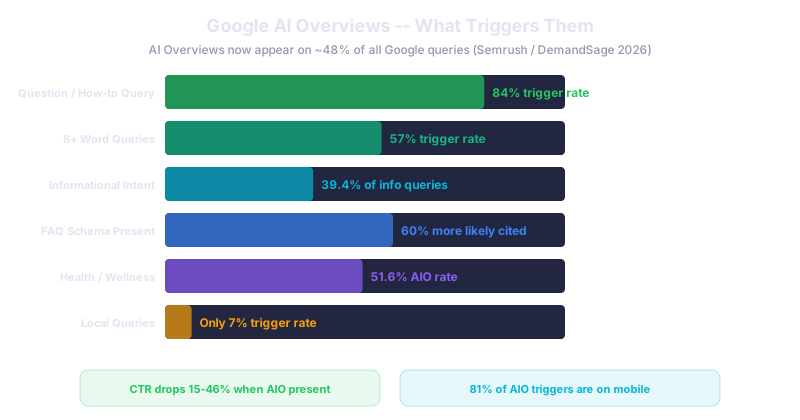
What Triggers an AI Overview
Not all queries get AI Overviews. Understanding the triggers helps you target the right opportunities.
Queries phrased as questions or how-to formats are 84% more likely to display an AI Overview, up from 60% in early 2025. Longer queries of eight words or more have a 57% chance of triggering them. Pages with FAQ schema markup are 60% more likely to be cited as a source.
For local businesses, there is good news: AI Overviews only appear on about 7% of local queries. This means traditional local SEO still works well for "plumber near me" and similar searches. The opportunity for small businesses is in the informational content they publish alongside their service pages.
How to Optimize Your Content
Structure around questions and direct answers. Start each section with a clear question as a heading, then provide a concise answer in the first one to two sentences. Google's AI pulls from content that directly answers the query.
Use FAQ schema markup. This structured data tells Google exactly which questions your page answers. Pages with FAQ schema are significantly more likely to be cited in AI Overviews.
Build topical depth. AI Overviews favor content from sites that demonstrate authority on a topic. Publishing multiple related articles that interlink creates stronger authority signals than a single comprehensive page.
Optimize for mobile. 81% of queries that trigger AI Overviews happen on mobile devices. Your content needs to load fast and display cleanly on phones.
What Does Not Work
Thin content stuffed with keywords will not get cited. AI Overviews pull from sources that Google's core ranking systems already trust. There is no shortcut around fundamental content quality and site authority.
Avoid creating content solely to target AI Overviews. Instead, focus on being the most helpful, accurate source for your topic. Google has stated that AI Overviews rely on the same core ranking systems that determine regular search results.
For a comprehensive approach to generative engine optimization that covers AI Overviews, ChatGPT citations, and Perplexity visibility, a structured content strategy is essential.
What This Means for Your Business
AI Overviews are not going away. They are expanding. The businesses that adapt their content strategy now will maintain search visibility while competitors lose traffic. Start by auditing your top-performing pages, adding FAQ schema, and restructuring content around clear question-and-answer formats.
Related reads:
- How ChatGPT Chooses Businesses to Recommend
- How to Get Cited in Perplexity AI
- What Is llms.txt and Does Your Business Need One?
Need help getting your business visible in AI search results? We build content strategies that earn citations in AI Overviews, ChatGPT, and Perplexity. Get started