
You serve 15 cities but your website only mentions your headquarters. Every time someone in those other 14 cities searches for your service, you are invisible. Service area pages fix that problem -- but only if you build them the right way. Google cracked down hard on low-quality location pages, and the difference between pages that rank and pages that get penalized comes down to content quality.
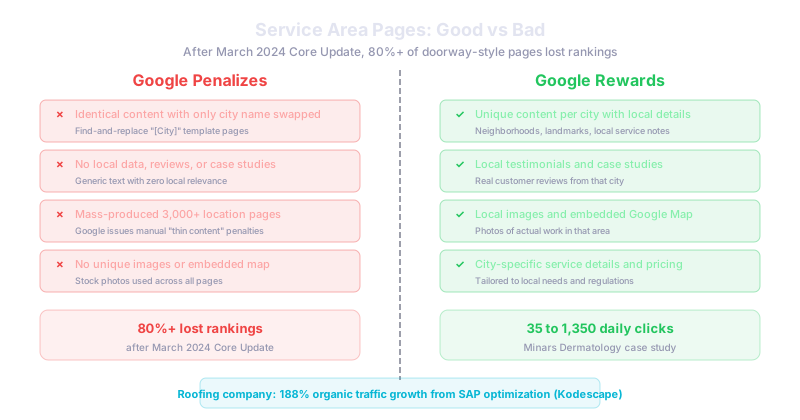
Short answer: Well-built service area pages with unique, locally relevant content deliver massive results. Minars Dermatology went from 35 to 1,350 daily clicks after optimizing their location pages. A roofing company saw 188 percent organic traffic growth. But after Google's March 2024 Core Update, 80 percent or more of doorway-style templated pages lost rankings, and Google issued manual "thin content" penalties for businesses with 3,000+ cookie-cutter location pages.
What Google Rewards vs What Google Penalizes
The line is clear. Google rewards service area pages that contain genuine, unique information about each city you serve. Google penalizes pages where you take one template, swap out the city name, and publish hundreds of near-identical pages.After the March 2024 Core Update, more than 80 percent of doorway-style location pages lost their rankings entirely (Sterling Sky). Google also issued manual "thin content" penalties for businesses that had published 3,000 or more templated location pages. The message is unambiguous: if your pages do not add unique value for each location, they will hurt you rather than help.
How to Build Service Area Pages That Rank
Each service area page should read like it was written specifically for customers in that city. Here is what to include:
City-specific service details. Mention the specific neighborhoods you serve, local regulations or permits that affect your service, and any location-specific pricing factors. A page about plumbing services in Scottsdale should mention the hard water issues common in that area, not just generic plumbing information.
Local testimonials and case studies. Include reviews from customers in that specific city. If you replaced a roof in Gilbert, put that case study on your Gilbert page. Real project photos from real local jobs are the strongest differentiator from templated pages.
Local images. Use photos of your actual work in that area, your team at local job sites, or recognizable local landmarks. Stock photos that appear on every location page signal to Google that the content is not genuinely local.
Embedded Google Map. Include a map showing your service area centered on that city. This reinforces the geographic relevance of the page and helps with local search signals.
Locally relevant internal links. Link to related service pages and to your Google Business Profile. If you have blog posts or case studies relevant to that area, link to those as well.
How Many Pages to Build
Start with your top 5 to 10 highest-value service areas -- the cities where you do the most business or want to grow. Build each page thoroughly with 800 to 1,200 words of unique content before moving to additional cities.
It is far better to have 10 excellent service area pages than 50 thin ones. Quality beats quantity every time in the post-2024 update landscape. Expand gradually, adding new city pages only when you can commit to making each one genuinely useful and unique.
The Content Framework
Use this structure for each page:
- H1: [Service] in [City] -- headline that includes your service and the city name
- Intro paragraph: What you do, why local customers choose you, and what makes this area unique
- Services section: Specific services available in this city, with local context
- Local social proof: Testimonials, reviews, and case studies from customers in this city
- Area-specific FAQ: Three to five questions specific to that service in that location
- Contact and CTA: Clear call to action with phone number and form
What This Means for Your Business
If you serve multiple cities and do not have dedicated pages for each one, you are leaving significant search traffic on the table. If you do have location pages but they are templated, you are at risk of losing rankings entirely.
Start with your top five service areas. Build genuinely unique pages for each one using real local content. Track rankings and traffic for 90 days. The results from even a small set of well-built pages will justify expanding to additional cities.
For a comprehensive local SEO strategy that includes service area pages, Google Business Profile optimization, and local content, explore our local SEO services.
Related reads:
- Google Business Profile Categories: How to Choose the Right Ones
- Voice Search Optimization for Local Businesses
- Should I Hire a Marketing Agency for My HVAC Business?
Need service area pages that actually rank? We build location-specific content strategies for home services businesses that drive calls from every city you serve. Get started
